China’s Memory Chip Giant CXMT Stuns Markets With Record-Breaking Shanghai Debut
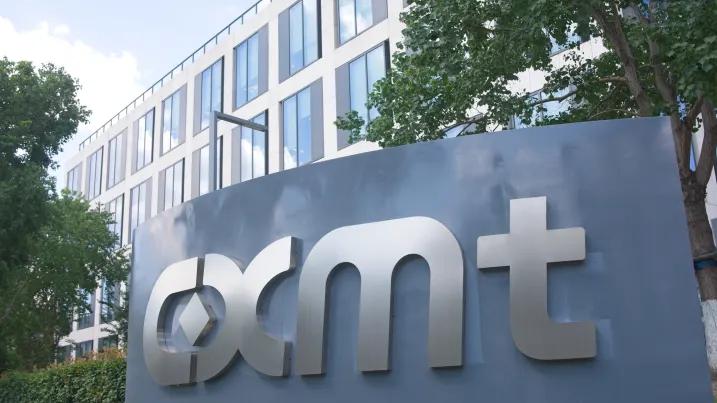
General view of CXMT office buildings is seen in Shanghai, China, on July 15, 2026, as CXMT raises billions for AI technology.

China’s semiconductor ambitions reached a major milestone on Monday as memory chip manufacturer ChangXin Memory Technologies (CXMT) made an explosive debut on the Shanghai Stock Exchange, with its shares soaring by more than 460% during the first day of trading. The remarkable performance instantly made the company the most valuable publicly listed business on mainland China and highlighted the growing confidence investors have in the country’s domestic semiconductor industry.
The Hefei-based company raised approximately 57.9 billion yuan (around $8.6 billion) through its initial public offering (IPO), making it not only China’s largest semiconductor IPO in years but also Asia’s biggest IPO of 2026. The shares were initially priced at 8.66 yuan before surging to around 49 yuan shortly after trading began, reflecting overwhelming demand from investors eager to gain exposure to China’s rapidly expanding chip sector.
The blockbuster debut comes at a crucial moment for China’s technology industry. Over the past several years, Beijing has invested heavily in building a self-sufficient semiconductor ecosystem as the country faces increasing export restrictions from the United States and its allies. Those restrictions have limited Chinese companies’ access to advanced chip manufacturing equipment and cutting-edge semiconductor technologies, encouraging domestic firms like CXMT to accelerate their own innovation and production capabilities.
CXMT specialises in DRAM (Dynamic Random Access Memory) chips, one of the most essential components found in modern electronic devices. DRAM chips are used in smartphones, laptops, artificial intelligence servers, automobiles and data centres, making them a critical part of today’s digital economy. As global demand for AI infrastructure continues to surge, memory chips have become increasingly valuable, placing companies like CXMT in a strong strategic position.
Although the company remains behind global industry leaders such as Samsung Electronics, SK Hynix and Micron Technology in terms of technology and market share, it has been expanding rapidly. Industry analysts estimate that CXMT now accounts for roughly 9% of global DRAM shipments, with ambitions to increase that figure to about 11% by 2028 through continued investment in manufacturing capacity and advanced memory technologies.
The company’s rapid rise has been driven by years of state support, local government investment and China’s broader industrial strategy aimed at reducing dependence on foreign chip suppliers. The city of Hefei, where CXMT is headquartered, has played a significant role in nurturing the company through funding, infrastructure and policy support. The IPO is therefore seen as a major success story for China’s long-term efforts to build globally competitive technology champions.
Despite the extraordinary market debut, analysts caution that CXMT still faces major challenges. The company continues to operate under restrictions that prevent it from freely accessing some of the world’s most advanced semiconductor manufacturing equipment, particularly extreme ultraviolet (EUV) lithography machines supplied by Dutch company ASML. These limitations make it more difficult for the company to produce the most advanced memory chips required for high-end AI applications.
Nevertheless, investors appear optimistic that the global shortage of memory chips, combined with booming AI demand, will continue to support CXMT’s growth. The company is planning to expand its wafer production capacity significantly over the next few years while investing heavily in higher-performance memory products that can compete more directly with international rivals.
The IPO has also attracted attention outside China. Some U.S. lawmakers have expressed concerns about the company’s growing influence, particularly as reports have suggested that major technology companies have explored sourcing memory chips from CXMT to reduce costs. The development highlights the increasingly complex relationship between global technology supply chains and geopolitical tensions surrounding semiconductor manufacturing.
Beyond its impressive share price performance, CXMT’s listing signals a broader shift in the global semiconductor landscape. China is determined to strengthen its domestic chip industry as artificial intelligence, cloud computing and advanced manufacturing become increasingly central to economic growth. The successful IPO demonstrates that investors believe Chinese chipmakers can continue expanding despite international trade restrictions and fierce competition from established global players.
Whether CXMT can eventually close the technology gap with industry leaders remains uncertain. Success will depend on its ability to innovate, overcome manufacturing challenges and continue scaling production while navigating geopolitical headwinds. However, its record-breaking market debut leaves little doubt that the company has become one of the most closely watched semiconductor firms in the world.
For China, the listing represents more than just a successful IPO—it is a powerful symbol of the country’s determination to become a global force in advanced semiconductor manufacturing during the AI era.