AI-Driven Job Losses Could Push the Federal Reserve Toward Interest Rate Cuts in 2027
Robin Brooks of the Brookings Institution says geopolitical shocks are proving less inflationary than feared, while AI-driven automation and white-collar job losses could become the dominant forces shaping Fed policy and the path of future interest rate cuts.

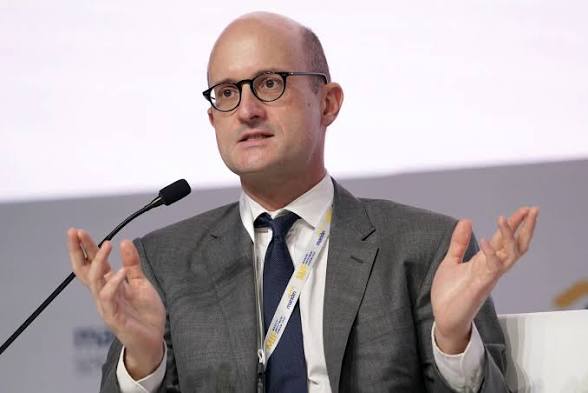
Robin Brooks of the Brookings Institution says geopolitical shocks are proving less inflationary than feared, while AI-driven automation and white-collar job losses could become the dominant forces shaping Fed policy and the path of future interest rate cuts.
Artificial intelligence is rapidly reshaping the global labour market, and its growing impact on employment could soon influence how the U.S. Federal Reserve manages the economy. According to Robin Brooks, a senior fellow at the Brookings Institution and former chief economist at the Institute of International Finance, widespread AI-driven job losses may become a key reason for the Fed to begin cutting interest rates next year.
Brooks argues that while the U.S. economy has remained relatively resilient, the accelerating adoption of AI is likely to weaken the labour market over time. Businesses across industries are increasingly deploying AI systems to automate tasks that were previously performed by humans, particularly in office-based and administrative roles. As more companies embrace these technologies, hiring could slow and layoffs may become more common.
The Federal Reserve closely monitors employment alongside inflation when making monetary policy decisions. If AI leads to a noticeable rise in unemployment or significantly slows job creation, the central bank could respond by lowering interest rates to stimulate borrowing, investment and consumer spending.
Brooks believes the labour market may become the deciding factor in future Fed policy. While inflation has remained an important concern in recent years, a sharp deterioration in employment could shift the central bank’s focus toward supporting economic growth rather than maintaining higher interest rates.
The discussion comes at a time when economists remain divided over AI’s long-term impact on employment. Some experts believe artificial intelligence will eliminate millions of existing jobs, especially routine white-collar positions such as customer support, data entry and administrative work. Others argue that although AI will replace certain roles, it will also create entirely new industries and employment opportunities, much like previous technological revolutions.
Recent corporate announcements have fuelled concerns about the pace of automation. Several technology companies have acknowledged using AI to improve efficiency and reduce the need for some workers, while others continue investing heavily in AI infrastructure and software.
Brooks noted that financial markets may be underestimating how quickly AI could reshape the labour market. Investors have largely focused on AI’s ability to boost productivity, profits and corporate earnings. However, if widespread automation significantly weakens employment, the broader economy could slow as household incomes and consumer spending come under pressure.
A softer labour market would likely strengthen the case for lower interest rates. Rate cuts generally reduce borrowing costs for households and businesses, encouraging investment and economic activity during periods of slower growth.
The debate also highlights the growing challenge facing policymakers. The Federal Reserve must balance the productivity gains generated by AI with the potential disruption to employment. While technological innovation has historically created new jobs over time, the transition period can be painful for workers whose skills become less valuable.
Brooks suggested that policymakers will increasingly need to assess not only inflation data but also how rapidly artificial intelligence is changing the structure of the workforce. If job losses accelerate faster than new opportunities emerge, monetary policy may need to adapt accordingly.
For now, the U.S. labour market remains relatively stable, but economists are watching closely for signs that AI adoption is beginning to have a measurable effect on employment. Should those effects become more pronounced over the coming months, expectations for Federal Reserve rate cuts in 2027 could strengthen, making AI an unexpected driver of future monetary policy decisions.