Southern Company and OpenAI Sign Landmark 25-Year Power Deal to Fuel the AI Boom
Southern Company CEO Chris Womack explain how the company’s 25-year power supply deal with OpenAI, power demand from data centers, data center moratoriums, and more.

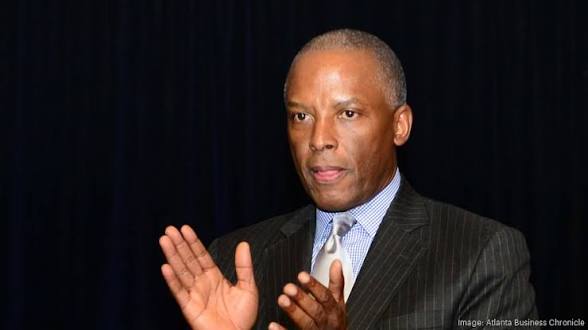
The rapid rise of artificial intelligence is creating an unprecedented demand for electricity, and one of the biggest utility companies in the United States is positioning itself to meet that need. Speaking with CNBC, Southern Company CEO Chris Womack discussed the company’s newly announced long-term agreement with OpenAI, highlighting how the AI revolution is transforming the energy sector.
Southern Company’s subsidiary has signed a 25-year power supply agreement with OpenAI for a major project in Effingham County, Georgia. The deal reflects a growing trend where technology companies are securing long-term energy supplies to support massive AI data centres that require enormous amounts of electricity to train and operate advanced AI models.
According to Womack, artificial intelligence is changing the way utilities think about future electricity demand. For years, electricity consumption in many parts of the United States remained relatively stable. However, the rapid expansion of AI infrastructure has dramatically altered those expectations. New data centres are being built at an unprecedented pace, and they require reliable, around-the-clock power to keep AI systems running.
The agreement with OpenAI demonstrates how closely the technology and energy industries are becoming intertwined. Instead of relying solely on short-term electricity purchases, major AI companies are increasingly looking for decades-long partnerships that provide certainty over both power availability and long-term investment.
Womack explained that meeting this demand requires careful planning. Building new power generation facilities and expanding grid infrastructure cannot happen overnight. Utilities must invest years in advance to ensure they have enough capacity to support future customers without compromising service for existing homes and businesses.
One of the biggest challenges facing the industry is balancing the enormous energy needs of AI with affordability and grid reliability. Utilities must determine who pays for the infrastructure upgrades needed to support these massive data centres while ensuring that everyday consumers are not unfairly burdened with additional costs. These negotiations have become a major focus as AI projects continue to grow in size and complexity.
The partnership also highlights Georgia’s growing role as a hub for technology investment. The state’s business-friendly environment, expanding infrastructure and access to reliable energy have made it an attractive destination for companies building next-generation AI facilities.
Beyond this single agreement, the broader AI industry is expected to reshape electricity markets for decades. Analysts believe demand from AI data centres could become one of the largest drivers of electricity consumption in the United States, encouraging utilities to invest in a mix of natural gas, nuclear energy and renewable power sources while modernising transmission networks.
For Southern Company, the OpenAI partnership represents more than just a long-term customer contract. It signals confidence that AI will remain one of the world’s fastest-growing industries and that dependable electricity will be one of its most valuable resources.
As AI capabilities continue to expand, relationships between technology companies and power providers are expected to become increasingly important. The companies that can deliver reliable, scalable and sustainable energy may play just as critical a role in the AI revolution as the firms developing the software itself.
The 25-year agreement between Southern Company and OpenAI is therefore not only a major business deal but also a clear indication that the future of artificial intelligence will depend as much on energy infrastructure as on breakthroughs in computing and machine learning.