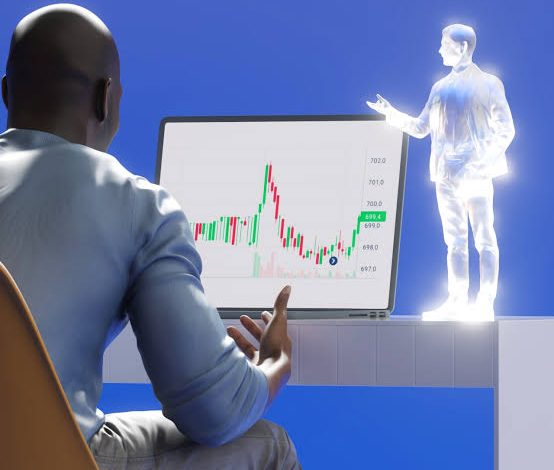
Artificial intelligence is moving beyond chatbots and simple automation into a new era of autonomous “AI agents” that can analyse markets, execute trades, monitor portfolios and react to breaking news around the clock. According to CNBC, these intelligent systems could reshape how both professional investors and everyday traders interact with financial markets, potentially making Wall Street faster, more efficient and more accessible.
Unlike traditional trading algorithms that follow fixed rules, AI agents are designed to operate with greater independence. They can gather information from multiple sources, reason through complex situations and decide what actions to take with minimal human involvement. Rather than simply executing pre-programmed instructions, these systems can continuously learn from new market conditions, corporate announcements, economic reports and geopolitical events.
Major financial institutions are investing heavily in this technology because markets no longer operate only during standard trading hours. News breaks at any time, cryptocurrencies trade 24 hours a day, and investors increasingly expect real-time responses. AI agents can monitor these developments continuously, allowing firms to react within seconds instead of waiting for human traders to return to their desks.
One of the biggest advantages of AI agents is their ability to handle enormous amounts of information simultaneously. Every day, financial markets generate vast quantities of earnings reports, government data, analyst research, social media discussions and economic indicators. Processing all of this information manually is nearly impossible. AI agents can scan these sources instantly, identify patterns and highlight opportunities or risks that might otherwise be overlooked.
Investment firms believe this could improve decision-making by allowing portfolio managers to spend less time gathering information and more time developing long-term investment strategies. Instead of replacing financial professionals entirely, many experts see AI agents acting as highly capable assistants that provide recommendations, perform research and automate repetitive tasks.
The technology may also benefit individual investors. Historically, sophisticated trading tools have largely been available to major banks and hedge funds with substantial resources. AI agents could eventually provide retail investors with access to advanced market analysis, portfolio management and automated investing tools that were once reserved for Wall Street professionals.
However, the growing use of autonomous AI also raises important concerns. Financial regulators and industry experts worry that if many firms rely on similar AI systems, they could react to market events in the same way, potentially increasing volatility during periods of stress. There are also questions about transparency, accountability and cybersecurity. If an AI agent makes an unexpected trading decision or becomes the target of a cyberattack, firms must ensure there are safeguards and human oversight.
Another challenge is trust. While AI models have become increasingly capable, they can still make mistakes, misinterpret information or generate inaccurate conclusions. In financial markets, even small errors can lead to significant losses. For that reason, many institutions are expected to keep humans involved in approving major investment decisions while AI agents handle analysis and routine execution.
Competition among technology companies is accelerating this trend. AI developers are racing to build increasingly powerful agent-based systems that can complete complex tasks with minimal supervision. As these models improve, financial firms are expected to integrate them into trading, research, compliance, customer service and risk management.
Industry leaders believe the shift toward AI agents represents one of the most significant technological changes in finance since electronic trading transformed markets decades ago. While widespread adoption will take time and regulations will continue to evolve, many believe autonomous AI will become a standard part of the financial industry’s infrastructure.
The future of Wall Street may not be defined solely by human traders sitting in front of trading terminals. Instead, it could involve teams of AI agents working continuously behind the scenes—analysing information, managing portfolios and responding to market developments every hour of every day. Whether this leads to more efficient markets or introduces new risks will depend on how responsibly the technology is developed, deployed and supervised.