Google Says AI-Powered Tools for Finance Are Reducing Analyst Work Time
The tech giant says its latest AI tools are helping financial professionals spend less time on manual research and more time on analysis, signaling a major shift in how investment research and financial decision-making are carried out.

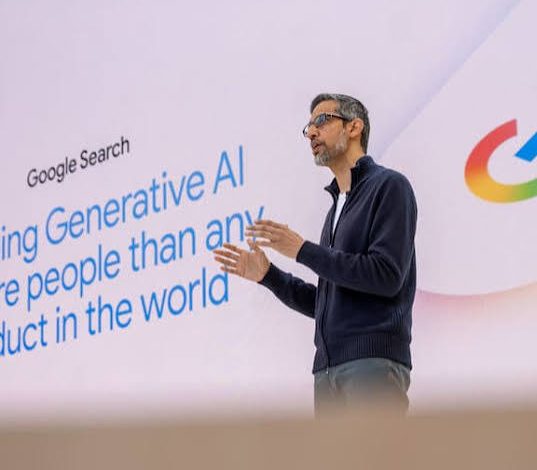
Artificial intelligence is rapidly becoming one of the most influential technologies in the financial industry, and Google believes its newest AI-powered tools are fundamentally changing the way analysts work. According to the company, financial professionals are now able to complete tasks that once required hours of manual effort in a fraction of the time, allowing them to focus on higher-value analysis instead of repetitive research.
For decades, financial analysts have spent a significant portion of their day reviewing earnings reports, company filings, economic data, research papers, market news, and regulatory documents before producing investment recommendations or risk assessments. The process is thorough but incredibly time-consuming. With the introduction of generative AI, however, much of this preliminary work can now be automated.
Google says its AI systems are capable of scanning enormous collections of financial documents, extracting relevant information, identifying patterns, summarizing lengthy reports, and answering complex questions in natural language. Rather than manually searching through hundreds of pages, analysts can ask conversational questions and receive organized, contextual responses supported by source material.
The company’s AI capabilities are built around Gemini, Google’s flagship family of large language models. Integrated into Google’s productivity software and financial tools, Gemini is designed to help finance teams organize spreadsheets, identify unusual trends, draft reports, summarize meetings, and analyze large datasets far more efficiently than traditional workflows.
The impact extends beyond simple automation. Instead of replacing analysts, Google argues that AI acts as an intelligent assistant that allows professionals to dedicate more time to interpreting information, evaluating investment opportunities, and making strategic decisions. Human judgment remains central, but AI dramatically reduces the workload associated with gathering and organizing information.
This reflects a broader transformation occurring across the financial industry. Investment banks, hedge funds, asset managers, and research firms are all investing heavily in AI technologies to improve productivity. Institutions increasingly see generative AI as a competitive advantage, enabling employees to process larger volumes of information while responding more quickly to market developments.
Financial research has traditionally been constrained by time. Analysts often spend hours collecting documents before they can even begin evaluating them. AI changes this equation by delivering concise summaries almost instantly while still allowing users to review the original sources when necessary. This significantly accelerates research without removing the analyst from the decision-making process.
Google also highlights AI’s ability to identify anomalies within financial data. Large datasets that might take analysts days to examine manually can be processed in minutes, helping finance teams detect unusual spending patterns, revenue fluctuations, operational risks, or budget inconsistencies more quickly.
Beyond investment analysis, AI is becoming increasingly useful for corporate finance departments. Businesses can use these tools to automate financial reporting, monitor expenses, prepare forecasts, and generate executive summaries for management. These capabilities reduce administrative burdens while improving consistency across financial operations.
Another major advantage is accessibility. Historically, sophisticated financial research tools were available primarily through expensive professional platforms. Google’s AI initiatives aim to make advanced analysis more approachable by allowing users to interact with financial information using natural language instead of specialized commands or technical software.
Despite these productivity gains, Google acknowledges that AI is not intended to replace human expertise. Financial decisions often involve qualitative factors such as management quality, competitive positioning, macroeconomic risks, and regulatory uncertainty—areas where human experience and judgment remain indispensable.
Industry researchers also caution that while AI can improve efficiency, users must continue verifying important outputs. Large language models may occasionally misinterpret information or generate inaccurate conclusions if prompts are unclear or underlying data is incomplete. Effective use of AI therefore requires human oversight rather than blind reliance.
The rapid adoption of AI is also reshaping workforce expectations. Rather than eliminating financial analysts altogether, firms are increasingly looking for professionals who can combine traditional financial expertise with AI literacy. Future analysts will likely spend less time collecting data and more time validating AI-generated insights, building investment strategies, and communicating recommendations to clients.
Competition in financial AI is intensifying as technology companies race to build increasingly capable research assistants. Alongside Google, several major financial information providers are integrating generative AI into their own platforms, reflecting an industry-wide shift toward AI-assisted research and decision-making.
Ultimately, Google’s message is clear: artificial intelligence is becoming an essential productivity tool for finance. By reducing the time analysts spend searching, organizing, and summarizing information, AI allows professionals to focus on the critical work that machines cannot easily replicate—strategic thinking, nuanced judgment, and informed decision-making.
As AI models continue to improve in accuracy, reasoning, and data integration, the role of financial professionals is expected to evolve rather than disappear. The future of finance is increasingly likely to involve close collaboration between human expertise and AI systems, combining the speed of automation with the insight and accountability that only experienced analysts can provide.