
UK AI Chip Startup Fractile Raises £577 Million in Major Funding Round
London-based Fractile has attracted hundreds of millions of pounds in new investment as it develops specialised AI processors designed to challenge Nvidia’s dominance in artificial intelligence computing.

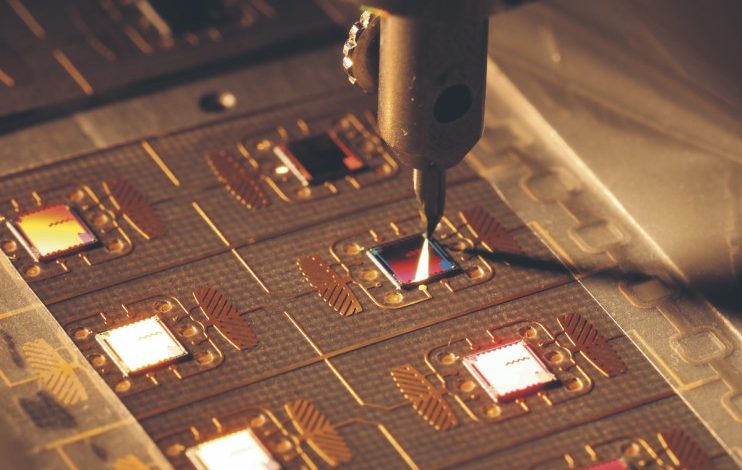
British artificial intelligence chip startup Fractile has raised approximately £577 million in a major Series C funding round, according to recent analyses of company filings at Companies House. The fundraising represents one of the largest investments in a European semiconductor startup and comes just five months after the company secured $220 million in its previous funding round. The investment reflects growing interest in companies developing specialised processors capable of handling the enormous computing requirements of modern artificial intelligence systems. Founded in 2022, Fractile is positioning itself as a potential challenger in the AI hardware market, where Nvidia currently holds a powerful position through its graphics processing units and data-centre technologies.
The company is developing a different approach to AI chip architecture by placing high-speed static random-access memory, known as SRAM, close to the processing components. This design aims to reduce the time and energy required to move information between memory and processors, a major challenge when AI systems generate large amounts of information. Fractile is particularly focused on inference, the stage at which trained AI models respond to questions, generate content and complete tasks. The company believes its technology could make these operations significantly faster and more efficient, especially for applications involving long responses and complex AI workloads. Its approach differs from the GPU architecture widely used by Nvidia and other major semiconductor manufacturers.
One of the most significant developments supporting Fractile’s growth is its reported commercial relationship with Anthropic, the company behind the Claude family of AI models. Reports indicate that Anthropic has agreed to an initial chip deal worth approximately $250 million, with the possibility of expanding the arrangement. The agreement is important because major AI developers require increasingly powerful infrastructure to operate their models at scale. However, Fractile’s chips are not yet in full commercial deployment, with data-centre installations expected in 2027. This means the company must still demonstrate that its technology can perform reliably under real-world operating conditions before its ambitions can be considered commercially proven.
The funding round has also attracted attention because of reported participation from major investment firms and the UK’s government-backed Sovereign AI Fund. According to a November 1 report by The Telegraph, investors including Lightspeed, Redpoint and Thrive Capital are involved in a deal expected to raise around $700 million and value Fractile at approximately $6.5 billion. The Sovereign AI Fund is also reportedly participating as part of Britain’s efforts to support promising domestic technology companies. The government established the fund with £500 million in taxpayer-backed financing, with an additional £60 million recently allocated. Fractile and the government had not publicly confirmed the reported investment details at the time of publication.
The investment highlights Britain’s growing ambition to become a stronger competitor in the global artificial intelligence industry. While the United States and China dominate much of the advanced AI hardware market, European companies are increasingly attracting capital to develop alternative chip technologies and computing infrastructure. Nevertheless, Fractile faces significant challenges, including semiconductor manufacturing, software development, customer integration and competition from established hardware manufacturers. Its reported funding is a major vote of confidence from investors, but financial backing alone does not guarantee technological or commercial success. The most important test will come in 2027, when the company is expected to begin deploying its processors in data centres. If Fractile delivers the performance it promises, it could become an important player in the race to build faster and more energy-efficient AI infrastructure.




