
NASA’s 22-Year-Old Swift Space Telescope Burns Up Over Indonesia After Failed Rescue Mission
The Neil Gehrels Swift Observatory has re-entered Earth's atmosphere after nearly 22 years in orbit, ending a historic scientific mission that transformed scientists' understanding of powerful cosmic explosions.

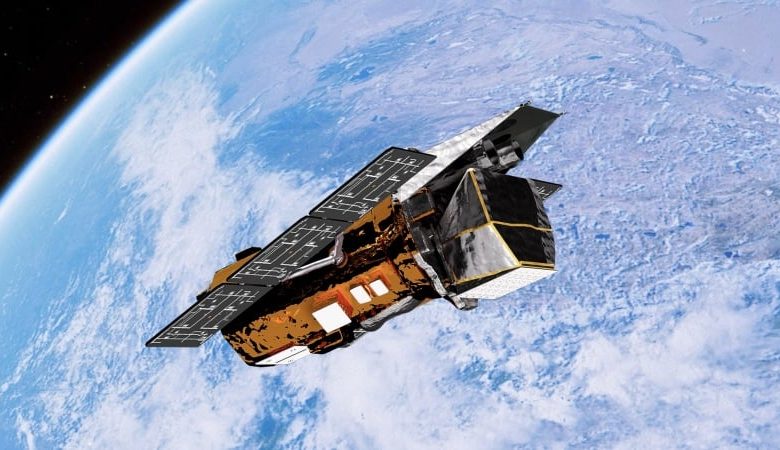
NASA’s Neil Gehrels Swift Observatory has burned up in Earth’s atmosphere after falling out of orbit on November 4, 2026. The 3,200-pound spacecraft re-entered the atmosphere at approximately 7:39 a.m. Eastern Standard Time over North Sumatra, Indonesia, travelling at roughly 22 times the speed of sound. NASA expected most of the telescope to disintegrate during re-entry, although some smaller components could have survived. No injuries or ground damage were reported.
Launched in November 2004, Swift was originally designed for a two-year mission to study gamma-ray bursts, among the most powerful explosions in the universe. However, the observatory continued operating for nearly two decades beyond its original mission timeline. Equipped with three scientific instruments, it helped researchers investigate supernova explosions, black holes, stellar flares, comets and asteroids. Its observations contributed to approximately 7,000 scientific research papers.
The telescope’s final chapter followed an unsuccessful rescue attempt involving Katalyst Space Technologies, an Arizona-based company contracted by NASA to extend the spacecraft’s operational life. The company’s robotic LINK spacecraft launched in July 2026 with the objective of approaching Swift and boosting it into a higher orbit. However, technical problems caused the rescue vehicle to spin uncontrollably, forcing the mission to be abandoned. Increased solar activity had also accelerated atmospheric drag, gradually pulling Swift closer to Earth until NASA officially ended its scientific operations on October 20.
Although the telescope’s destruction marks the end of an important chapter in space exploration, its scientific contributions will continue supporting research for years. Swift provided early warnings of gamma-ray bursts, allowing other observatories to quickly investigate these extraordinary cosmic events. NASA and the scientific community are now considering how future missions can build on its achievements. The failed rescue also highlights the growing importance of developing spacecraft capable of repairing, servicing and extending the operational lives of ageing satellites.




