Amazon Plans to Sell Trainium AI Chips to Outside Customers in 2027
Amazon is preparing to sell its in-house artificial intelligence chips beyond Amazon Web Services, positioning itself to compete more directly with Nvidia and AMD in the rapidly expanding AI semiconductor market.

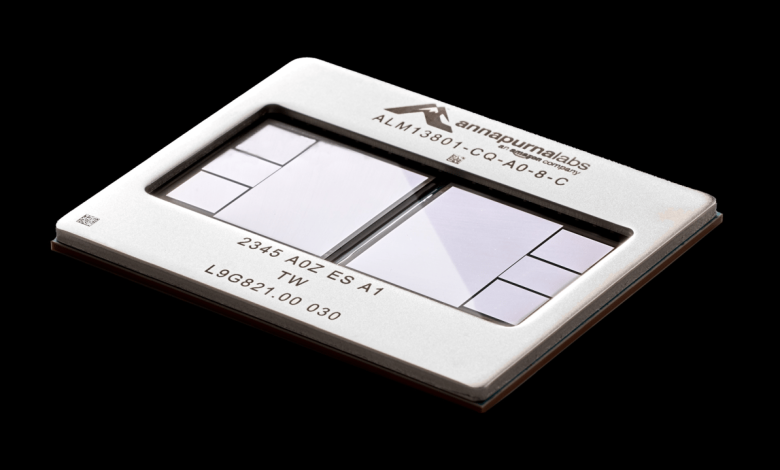
Amazon has announced plans to make its custom-designed Trainium artificial intelligence chips available to external customers from late 2027. The announcement was made by CEO Andy Jassy during the company’s third-quarter earnings call on October 29, 2026. Until now, Trainium processors have primarily been available through Amazon Web Services (AWS), where businesses rent computing capacity to train and operate AI models. However, growing demand from companies interested in purchasing the hardware directly has encouraged Amazon to expand its strategy. Jassy confirmed that customers have repeatedly asked the company to make Trainium available outside its cloud platform, describing external chip sales as a potentially significant business opportunity.
Trainium was developed to provide an alternative to expensive AI processors supplied by companies such as Nvidia. These specialised chips are designed to handle demanding workloads involved in training large AI models and running inference, the process through which trained models generate responses. Amazon believes its processors can deliver competitive price-performance while reducing the cost of operating large AI systems. The company has already attracted major AI customers, including Anthropic and OpenAI, which use AWS infrastructure powered by its custom silicon. By selling Trainium directly, Amazon could allow organisations to build their own AI computing infrastructure rather than depending entirely on rented cloud services.
The decision also reflects the extraordinary growth in demand for Amazon’s custom semiconductor business. During the earnings call, Jassy said revenue commitments for Trainium and Graviton, Amazon’s custom server processors, had increased more than 20 times year over year. AWS generated approximately $46 billion in third-quarter revenue, representing growth of around 39% compared with the same period last year. Its reported backlog also reached $578 billion, indicating substantial demand for future cloud computing services. Amazon is therefore exploring how to expand its chip business while continuing to supply the enormous computing requirements of its existing cloud customers.
However, selling chips externally creates an important business decision for Amazon. Jassy explained that selling processors directly could generate revenue more quickly because the company would recognise sales when the hardware leaves its inventory. Keeping those same chips inside AWS, on the other hand, could produce greater cumulative revenue and free cash flow over five to six years through services such as Amazon EC2 and Bedrock. Amazon must therefore balance the opportunity to establish a separate semiconductor business against the financial benefits of using its processors to power its own cloud infrastructure. The company expects both businesses to become significant, although the allocation of available chip capacity will remain an important consideration.
Amazon’s expansion could introduce another major competitor into an AI hardware market currently dominated by Nvidia. Other technology companies, including Google, are also developing custom AI processors and exploring ways to make them available beyond their own cloud platforms. This growing competition could give AI developers more hardware choices, encourage improvements in computing efficiency and potentially reduce dependence on a small number of chip suppliers. Nevertheless, competing in the external semiconductor market will require Amazon to provide reliable hardware, software support, manufacturing capacity and long-term customer service. With external Trainium sales expected to begin in late 2027, Amazon is preparing for a broader role in the global AI infrastructure industry, moving beyond cloud computing towards becoming a direct supplier of advanced AI chips.