Cheap Drones Fuel Rising Organised Crime Across Latin America
Criminal groups exploit commercial drones for smuggling, surveillance and attacks as security agencies race to counter growing aerial threat

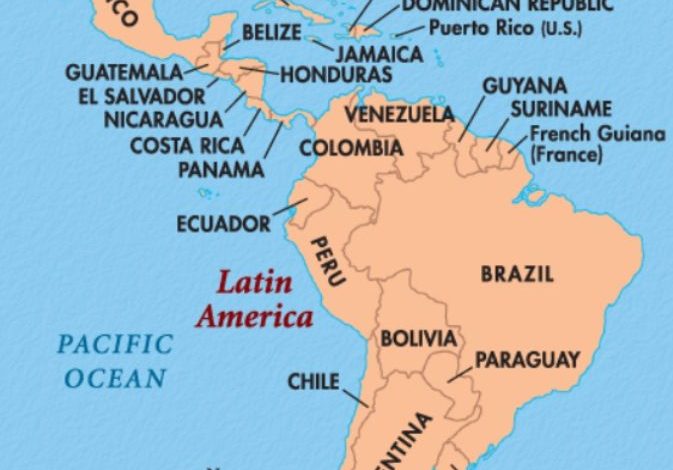
 Commercial drones, once primarily used for photography and recreational purposes, are increasingly being adapted by organised crime groups across Latin America to smuggle contraband, monitor security forces, transport illicit materials and coordinate criminal activities, posing a growing challenge to law enforcement agencies across the region.
Authorities say the affordability, accessibility and versatility of the devices have enabled criminal organisations to bypass conventional security measures and expand their operations in prisons, border communities and remote territories.
Drones fuel prison crime in Ecuador
One of the most alarming examples has emerged in Ecuador, where authorities say criminal groups have repeatedly used drones to support illegal activities inside correctional facilities.
Ecuador’s Interior Minister, John Reimberg, disclosed in late April that nearly 600 drones linked to organised crime groups had attempted to access El Encuentro prison since construction of the facility began in June 2024.
According to local media reports, the drones were used to deliver weapons, facilitate communication with inmates and sustain criminal operations from within the prison.
The development highlights the worsening security crisis in Ecuador’s correctional system. Since 2018, more than 680 inmates have reportedly been killed in violent clashes between rival criminal gangs inside prisons.
Daniel Potón, Dean of the IAEN School of Security and Defense, said prisons have effectively become operational centres for organised crime.
“Prisons, in practice, are the hubs of criminal operations. Bringing technology, communications, or resources into these spaces strengthens their operational capabilities,” Potón told Diálogo.
Security experts say the increasing use of drones allows criminal groups to bypass traditional security measures designed to restrict the movement of weapons, people and communications.
Criminal groups expand drone operations
Authorities across Latin America have recorded a sharp increase in the use of commercial drones by criminal and armed groups.
In Colombia, security forces in May 2026 intercepted an explosives-laden drone near Bogotá’s El Dorado International Airport and the nearby Military Air Transport Command.
Investigators linked the device to the Carlos Patiño Front, a dissident faction of the Revolutionary Armed Forces of Colombia (FARC).
Weeks earlier, another drone attack allegedly carried out by Comandos de la Frontera killed three Colombian soldiers near the Ecuadorian border.
In Brazil, criminal organisations have repeatedly used drones to transport mobile phones, drugs and other contraband into prison facilities, enabling inmates to continue directing criminal operations from behind bars.
Similarly, Mexican authorities have seized several drones modified by drug cartels to carry explosive devices, particularly in the states of Michoacán and Jalisco, where the aircraft have reportedly been deployed against rival gangs and security personnel.
Security analysts say these incidents demonstrate how criminal organisations are increasingly adapting commercially available drones for surveillance, logistics and offensive operations.
Unlike conventional smuggling methods, drones can easily avoid checkpoints, difficult terrain and physical barriers while reducing the risk of exposing criminal operatives.
Their relatively low cost also allows criminal groups to quickly replace confiscated equipment without significantly affecting their operations.
“Criminal organizations are extremely innovative. They take advantage of technological advances and exploit legal loopholes or areas with limited state presence,” Potón said.
Experts warn that governments must strengthen investments in drone detection technologies, signal-jamming equipment, radar systems and other counter-drone capabilities to address the evolving threat.
The challenge is particularly significant in strategic locations such as drug trafficking corridors, illegal mining sites and border communities where organised crime maintains a strong presence.
Beyond prisons, criminal groups are also deploying drones to monitor security force movements, transport high-value contraband and provide aerial intelligence across difficult terrain.
Security agencies strengthen response
In response to the growing threat, Ecuador has expanded its use of surveillance technology and unmanned aerial systems to improve intelligence gathering and support security operations.
The country has also benefited from cooperation with the United States, which has provided training, intelligence support, funding and security assistance for drone surveillance and operations targeting transnational criminal organisations.
Ecuador’s participation in the Americas Counter Cartel Coalition has further strengthened regional collaboration through intelligence sharing and joint operational efforts aimed at combating organised crime.
The Ecuadorian Air Force also established the Rayo Justiciero drone squadron in September 2025.
By early 2026, the unit had completed more than 1,120 missions supporting counternarcotics and internal security operations, including identifying clandestine airstrips, monitoring illegal mining activities, tracking trafficking routes and providing real-time intelligence to security agencies.
Across Latin America, security agencies are increasingly adapting to an environment where low-altitude airspace has become another operational domain exploited by organised criminal networks.
Growing regional concern
Security experts say Ecuador’s experience demonstrates how relatively inexpensive commercial technologies can significantly enhance the operational capabilities of organised crime.
“Technology as such is one thing, and the way it is adapted for multiple purposes is another. The speed at which organized crime adapts often exceeds the reaction capacity of states,” Potón said.
Analysts believe governments across Latin America and the Caribbean must not only respond to technological advances but also anticipate how criminal organisations may exploit emerging technologies in the future.
They say greater investment in surveillance systems, intelligence sharing, signal-jamming technology and regional cooperation will be critical to tackling the expanding threat.
Experts warn that the challenge is no longer limited to tracking criminal activities on land and at sea, as security agencies must now contend with an increasingly contested low-altitude airspace where inexpensive commercial drones provide organised crime groups with surveillance, communication, logistics and offensive capabilities.