
China Ships 78% of Global Humanoid Robots
China accounted for 77.9% of global humanoid robot shipments in the first half of 2026, highlighting its growing dominance in the rapidly expanding robotics industry.

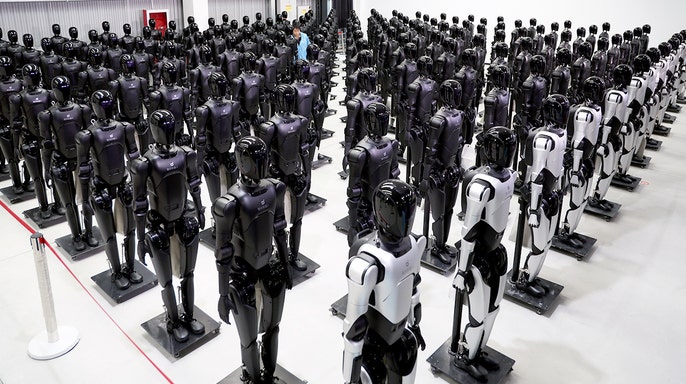
China is rapidly strengthening its position as the world’s leading manufacturer of humanoid robots, accounting for 77.9% of global shipments during the first half of 2026, according to figures attributed to International Data Corporation (IDC). More than 19,000 humanoid robots were shipped from China during the period, while global shipments reached nearly 25,000 units. The figures represent a dramatic expansion of the sector, with worldwide shipments reportedly increasing by more than 400% compared with the same period a year earlier.
Chinese manufacturers are benefiting from an extensive industrial supply chain, large-scale manufacturing capacity and a strong ecosystem built around electric vehicles, batteries, motors and other advanced components. Companies such as AgiBot and Unitree Robotics have emerged as major players in the market. Other Chinese manufacturers, including Booster Robotics, UBTech, Leju Robot, Galbot and Astribot, also appear among the leading suppliers, demonstrating how concentrated China’s humanoid robotics industry has become.
AgiBot was reportedly the largest individual manufacturer during the first half of the year, shipping more than 8,600 humanoid robots, while Unitree shipped roughly 5,000. Nine of the ten manufacturers listed in IDC-related rankings were Chinese companies, with US-based Figure AI being the notable non-Chinese company among the leading group. The figures show that China’s advantage is not limited to individual companies but extends across a broader manufacturing ecosystem capable of producing robots at increasing scale.
The rapid increase in shipments does not necessarily mean humanoid robots have already reached widespread commercial maturity. Researchers and industry analysts continue to point to challenges involving reliability, artificial intelligence, manipulation, safety, cost and the ability of robots to operate effectively in unpredictable real-world environments. Much of the current demand is also connected to industrial and commercial applications, research, training and pilot programmes rather than large-scale replacement of human workers.
Nevertheless, China’s manufacturing advantage could become increasingly important as humanoid robotics moves toward mass production. IDC has reportedly raised its forecast for global humanoid robot shipments in 2030 to more than 750,000 units, while other research firms expect substantial growth throughout the decade. With Chinese companies already producing the majority of today’s units, the country’s ability to reduce manufacturing costs and improve robotic capabilities could give it a significant advantage as the technology moves from experimentation toward broader commercial deployment.




