
China’s Humanoid Robots Break Multiple Human Records
Chinese Humanoid Robots Set New Speed and High-Jump Records at the World Humanoid Robot Games as the Country Accelerates Its Push Into Advanced Robotics.

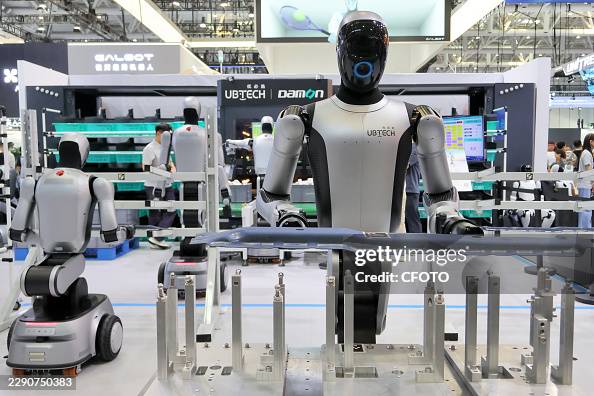
Chinese humanoid robots have achieved a series of remarkable athletic performances at the 2026 World Humanoid Robot Games in Beijing, highlighting the rapid progress of the country’s robotics industry. One of the most notable achievements came when a humanoid robot completed the 100-metre sprint in 8.64 seconds, faster than Usain Bolt’s 9.58-second human world record.
The competition also produced breakthroughs in other events. Chinese humanoid robots recorded a 400-metre time of 38.15 seconds and completed the 1,500 metres in 2 minutes and 21.64 seconds. Another robot achieved a 2.88-metre standing high jump, exceeding the current human high-jump world record of 2.45 metres.
The performances took place during an event featuring more than 2,000 robots from hundreds of teams across 16 countries. Competitions included running, football, table tennis, weightlifting and other demonstrations designed to test robotic movement, coordination and physical control. The event has become a showcase for China’s rapidly expanding humanoid-robot sector.
However, the records do not necessarily mean humanoid robots are ready to outperform humans in everyday activities. Researchers and engineers say the biggest challenge is turning impressive demonstrations into machines that can reliably perform useful tasks in unpredictable real-world environments. Reuters reported that developers of the record-setting TianGong robots are now focused on improving reliability, adaptability and practical usefulness.
China is increasingly treating humanoid robotics as a strategic technology, combining advances in artificial intelligence, motors, sensors and manufacturing. The industry is already exploring applications in factories, logistics and commercial services, but significant technical challenges remain. The latest records nevertheless demonstrate how quickly robotic mobility is improving and underline China’s growing ambition to become a global leader in humanoid robotics.




