China’s Moonshot AI Closes $3.5 Billion Funding Round at $35 Billion Valuation
Chinese AI startup surpasses fundraising target as investors rally behind its breakthrough Kimi K3 model, strengthening its position in the global race against leading U.S. AI developers.

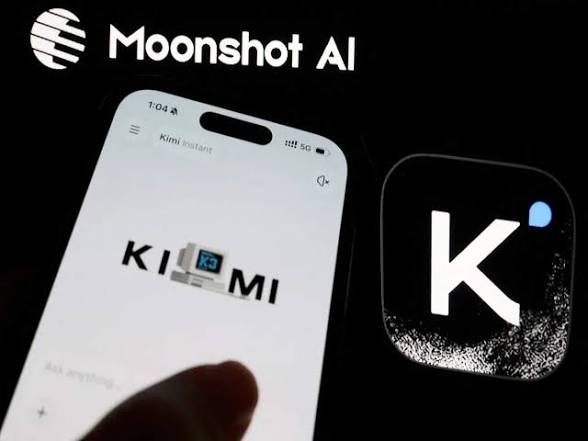
China’s artificial intelligence industry has recorded one of its biggest financing events yet, as Beijing-based startup Moonshot AI successfully closed a $3.5 billion funding round, pushing the company’s valuation to approximately $35 billion. The fundraising, which reportedly exceeded the company’s original target, highlights the growing confidence investors have in China’s next generation of AI companies and signals that competition in the global AI industry is becoming even more intense.
The funding round arrives at a crucial moment for both Moonshot AI and China’s broader technology sector. Over the past few years, Chinese AI startups have accelerated their efforts to build world-class large language models despite facing restrictions on access to advanced semiconductor technology. Instead of slowing progress, many companies have responded by investing heavily in research, improving software efficiency, and developing innovative approaches to training powerful AI systems. Moonshot AI has emerged as one of the biggest beneficiaries of this wave of innovation.
At the centre of the company’s recent success is Kimi K3, Moonshot AI’s latest flagship large language model. Since its release, the model has attracted significant attention from developers, researchers, and enterprise customers because of its impressive reasoning capabilities, coding performance, multilingual understanding, and ability to compete with some of the world’s leading AI models. Industry experts have described Kimi K3 as one of the strongest AI models to come out of China, helping establish Moonshot AI as a serious challenger to some of the biggest names in artificial intelligence.
Unlike many companies that keep their most advanced AI systems completely closed, Moonshot AI has embraced an open-weight strategy for Kimi K3. This allows developers and businesses to access, customise, and build upon the model for their own applications. The approach has been widely welcomed within the developer community because it encourages innovation while allowing companies to deploy advanced AI solutions more quickly. Open-weight models have become increasingly popular as businesses seek greater flexibility and control over how artificial intelligence is integrated into their products and services.
Investor demand for Moonshot AI reportedly exceeded expectations during the fundraising process. Strong interest from institutional investors enabled the company to secure substantially more capital than originally planned. Raising billions of dollars in a single funding round reflects not only confidence in Moonshot’s technology but also growing belief that Chinese AI firms can compete on a global stage despite geopolitical tensions and export restrictions affecting access to cutting-edge chips.
Training modern AI models requires extraordinary financial resources. Companies developing frontier AI systems spend billions of dollars acquiring graphics processing units (GPUs), building data centres, hiring elite machine learning researchers, and maintaining massive cloud infrastructure capable of processing enormous amounts of data. As models become larger and more capable, the cost of developing competitive AI continues to rise. This makes access to capital one of the most important competitive advantages in today’s AI race.
Moonshot AI plans to use the newly raised funds to significantly expand its AI infrastructure. A large portion of the investment is expected to be allocated toward purchasing additional computing resources, expanding cloud capacity, improving data processing capabilities, and accelerating research into future generations of AI models. The company is also expected to recruit more engineers and AI scientists as competition for top talent continues to intensify across the global technology industry.
The company has experienced remarkable growth since its founding in Beijing. Initially recognised for its AI chatbot known as Kimi, Moonshot quickly gained popularity because of its ability to process unusually long documents and maintain extended conversations with users. While many AI chatbots struggled with long-context reasoning, Kimi distinguished itself by handling significantly larger amounts of information within a single conversation, making it attractive for researchers, students, programmers, and enterprise users.
Since then, Moonshot has rapidly expanded beyond consumer AI products. The company has increasingly focused on building foundation models capable of powering enterprise software, AI assistants, autonomous agents, programming tools, business automation platforms, and research applications. This strategic shift reflects a broader industry trend where AI companies seek long-term revenue by providing infrastructure and enterprise solutions rather than relying solely on consumer-facing chatbots.
Moonshot AI’s success also reflects the broader transformation taking place within China’s artificial intelligence ecosystem. Over the past two years, numerous Chinese technology companies have introduced increasingly capable AI models that demonstrate rapid improvements in reasoning, mathematics, coding, scientific analysis, and multilingual communication. The pace of innovation has surprised many international observers, particularly as Chinese firms continue advancing despite restrictions on access to the latest semiconductor technologies.
Government support has also played an important role in accelerating China’s AI ambitions. Artificial intelligence has become one of the country’s strategic priorities, with policymakers encouraging domestic innovation, increased investment in AI research, and greater collaboration between universities, technology companies, and industrial partners. These initiatives aim to reduce dependence on foreign technology while strengthening China’s long-term competitiveness in advanced computing and AI development.
For investors, Moonshot AI represents more than just another promising startup. The company is increasingly viewed as one of China’s leading AI champions with the potential to compete internationally. A valuation of $35 billion places Moonshot among the world’s most valuable privately held AI companies and demonstrates how quickly investor sentiment has shifted toward businesses capable of building frontier AI models.
Competition within the AI sector continues to intensify. Global leaders such as OpenAI, Anthropic, Google DeepMind, Meta, and xAI continue investing heavily in increasingly capable models, while Chinese companies including DeepSeek, Alibaba, Tencent, Baidu, Zhipu AI, and Moonshot race to deliver competitive alternatives. The battle is no longer limited to chatbot performance but extends across enterprise software, cloud computing, AI agents, robotics, healthcare, education, financial services, and scientific research.
One of the most important areas of competition is the development of AI agents capable of carrying out complex tasks with minimal human supervision. Moonshot AI is expected to invest heavily in this area, developing systems that can reason through multi-step problems, write software, analyse large datasets, automate business workflows, and interact with external digital tools. Many analysts believe AI agents will become the next major growth opportunity following today’s generation of conversational AI assistants.
Another priority for the company is multimodal artificial intelligence. Future AI systems are expected to process text, images, audio, video, and other forms of data simultaneously, allowing them to perform increasingly sophisticated tasks across multiple industries. By investing in multimodal capabilities, Moonshot hopes to position itself at the forefront of the next phase of AI development.
The latest funding also increases speculation that Moonshot AI could eventually pursue an initial public offering. Although the company has not officially announced any listing plans, its rapidly rising valuation and expanding investor base have fuelled expectations that it could become one of Asia’s largest AI-related public offerings in the coming years. An IPO would provide additional capital for research while giving investors an opportunity to participate directly in the company’s future growth.
Beyond the financial headlines, Moonshot AI’s fundraising highlights the extraordinary pace at which artificial intelligence is reshaping the global technology landscape. Billions of dollars are flowing into AI companies as governments, investors, and corporations view the technology as essential to future economic growth, national competitiveness, and industrial transformation. Success increasingly depends not only on developing better algorithms but also on securing sufficient computing power, attracting world-class talent, and building the infrastructure needed to train and deploy increasingly powerful models.
For Moonshot AI, the successful $3.5 billion funding round marks a defining milestone in its journey. With fresh capital, expanding technological capabilities, and growing recognition from developers and investors alike, the company is entering its next phase of growth with considerable momentum. As competition between Chinese and American AI companies continues to intensify, Moonshot AI now stands among the industry’s most closely watched startups. Its ability to convert this financial backing into technological breakthroughs, commercial success, and global market expansion will help determine whether it can become one of the defining AI companies of the next decade.