Chinese Firms Buy More Than One Million Nvidia Chips Amid AI Computing Shortage
Chinese technology companies have reportedly purchased more than one million Nvidia gaming and workstation graphics chips in 2026, highlighting the difficulty of meeting the country’s growing AI computing demand despite efforts to develop domestic alternatives.

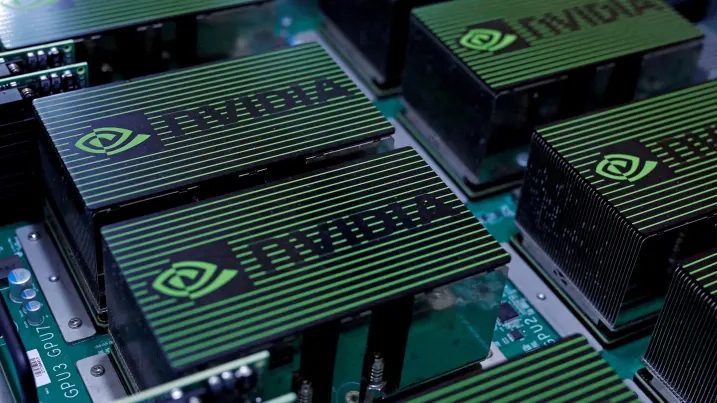
Chinese technology companies have purchased more than one million Nvidia gaming and workstation chips this year as they struggle to secure sufficient computing power for their expanding artificial intelligence operations. According to a report published by the Financial Times on October 13, 2026, the companies have turned to processors that were not originally designed for advanced AI workloads to help address a growing shortage of computing resources. The purchases highlight Nvidia’s continued importance to China’s technology industry, even as the United States restricts exports of its most powerful AI processors and Beijing encourages businesses to adopt domestically manufactured alternatives. The reported buying spree also demonstrates how rapidly demand for AI computing infrastructure is growing as Chinese companies invest in larger models, automated agents and data centres.
China has made the development of domestic AI chips a national priority, with companies including Huawei, Alibaba, Baidu and Cambricon expanding their manufacturing and chip-design operations. However, the country’s domestic supply is reportedly still insufficient to meet demand. Estimates cited in recent reporting suggest China could produce approximately 3.5 million AI chips in 2026, while total demand could exceed five million units. This gap has encouraged technology companies to seek alternative sources of computing capacity, including Nvidia gaming and workstation graphics processing units. Although these chips do not match the performance of leading specialised AI accelerators across every workload, they can still contribute useful processing power to certain applications. The shortage illustrates the challenge of building an independent semiconductor industry quickly enough to keep pace with the expansion of AI services.
The reported purchases include Nvidia workstation and gaming products such as the RTX Pro 6000D, RTX Pro 5000 and RTX 5090. These processors are different from the specialised data-centre accelerators used to train and operate the largest AI models. However, they can support selected tasks, including parts of the inference process in which an AI system prepares to generate a response. Their availability also offers Chinese companies another way to add computing capacity while access to more advanced processors remains restricted. US export controls have limited Nvidia’s ability to supply certain high-performance AI chips directly to China, while Beijing has encouraged companies to reduce their reliance on foreign semiconductor technology. The continued demand for Nvidia products shows that export restrictions and domestic development efforts have not eliminated Chinese businesses’ need for internationally developed hardware.
Another reason Nvidia remains attractive is its CUDA software platform, which developers widely use to build and run AI applications. Chinese companies have invested years in software and infrastructure built around CUDA, making it difficult and expensive to move entirely to competing platforms. Huawei has developed its own alternative, known as CANN, while expanding its Ascend processor family. Alibaba is also advancing its in-house chip technology as it seeks to strengthen China’s domestic AI ecosystem. However, switching hardware often requires software adaptation, testing and optimisation, not simply purchasing a different processor. As a result, the transition to domestic chips depends on both manufacturing capacity and the maturity of the software tools that developers need to use them efficiently.
The situation has significant implications for the global semiconductor industry and the wider competition between the United States and China over artificial intelligence. Nvidia continues to benefit from demand for its technology, although restrictions on advanced chip exports have limited its position in the Chinese data-centre market. Meanwhile, Chinese manufacturers are attempting to close the gap through increased production, improved chip designs and larger computing clusters. The reported purchases do not mean that gaming graphics cards can fully replace specialised AI accelerators; rather, they show how companies are using available hardware to address immediate shortages. Looking ahead, China’s ability to meet its AI ambitions will depend on how quickly domestic manufacturers can increase output, improve performance and provide competitive software ecosystems. Until those improvements satisfy demand, Chinese technology companies are likely to continue seeking a mixture of domestic and alternative computing resources.