Google DeepMind Launches SynthID Bio to Watermark AI-Designed Proteins
Google DeepMind has introduced SynthID Bio, a new watermarking technology designed to identify AI-generated protein sequences and structures while preserving their biological function.

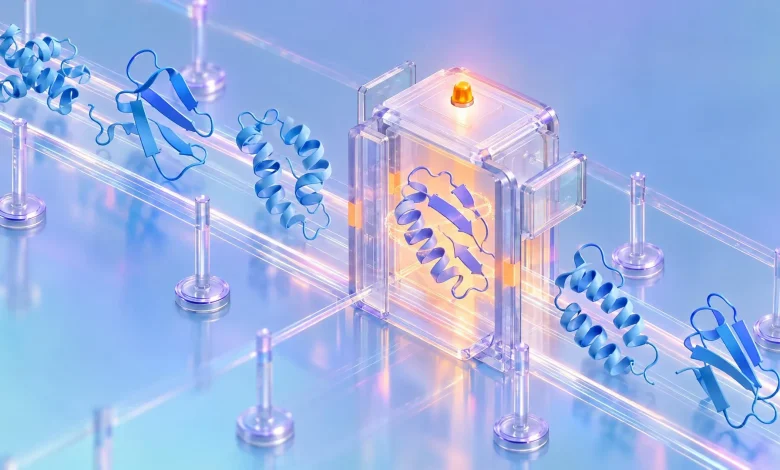
Google DeepMind has introduced SynthID Bio, extending its AI watermarking technology into synthetic biology. The system is designed to embed an imperceptible and verifiable signal directly into AI-generated protein sequences and predicted three-dimensional structures. The goal is to make it possible to determine whether a biological design originated from an AI system, creating a new layer of provenance for increasingly powerful AI-based biology tools.
The technology addresses a growing challenge in biological security. AI systems can now design proteins and other biological molecules that may look substantially different from naturally occurring sequences. This can make traditional screening systems, which often compare DNA orders against databases of known threats, less effective at determining the origin of unfamiliar designs. SynthID Bio could provide researchers and DNA-synthesis companies with another signal for identifying AI-generated biological material.
SynthID Bio uses different techniques depending on what is being watermarked. For protein sequences, the system subtly influences the selection of amino acids during the design process. For predicted three-dimensional structures, DeepMind modified part of AlphaFold 3’s diffusion process so that the resulting structures contain a detectable watermark. The company says these changes are designed to remain effectively invisible while allowing the watermark to be detected computationally.
DeepMind tested the technology on AI-designed protein binders targeting VEGF-A, the receptor-binding domain of the SARS-CoV-2 spike protein and PD-L1. According to the company, the watermarked designs performed comparably to unwatermarked designs in the reported laboratory tests, including measures such as binding performance and sequence diversity. The researchers also demonstrated that the watermark could be detected in physically synthesized proteins rather than only in their original digital files.
The technology is still a proof of concept rather than a complete security solution. DeepMind acknowledges that deliberate attempts to remove or manipulate the watermark remain an important challenge. The company is also working with researchers at Stanford University and the Arc Institute to apply SynthID Bio to Evo 2, a genomic AI model, including early experiments involving an AI-designed bacteriophage. If the approach can become robust against manipulation, it could provide an additional layer of provenance and biosecurity as AI becomes increasingly capable of designing biological systems.