
Google’s Project Suncatcher Satellite Goes Online to Test AI Computing in Space
Google has successfully brought its experimental Project Suncatcher satellite online, marking an important step towards its ambitious plan to build solar-powered AI data centres in orbit.

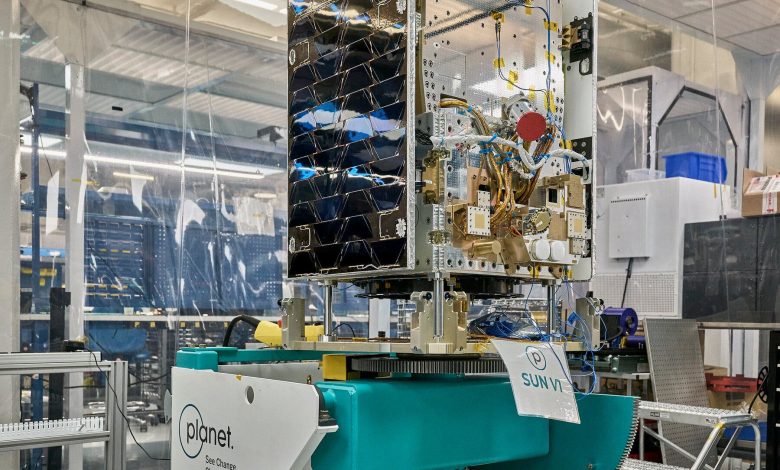
Google has reached a major milestone in its effort to move artificial intelligence computing beyond Earth after its experimental Project Suncatcher satellite successfully began operating in space. The satellite, developed in partnership with Planet Labs, was launched aboard a SpaceX Falcon 9 rocket on October 1, 2026. On October 30, Google confirmed that the spacecraft had completed its initial commissioning process and was communicating with engineers on the ground. The mission is designed to investigate whether powerful AI processors can operate reliably in the harsh environment of space. It represents an early experiment in Google’s long-term ambition to develop networks of satellites capable of processing artificial intelligence workloads while orbiting Earth.
The experimental spacecraft carries four Google Tensor Processing Units (TPUs), specialised processors developed to handle demanding machine-learning workloads. During its first operational test, engineers sent a prompt asking the satellite’s onboard AI model, Gemma 4, to write a short poem about being in space. The satellite successfully generated the response, demonstrating that AI processing could be performed directly in orbit and communicated back to Earth. However, the system currently has significant limitations. Although the satellite carries four TPUs, it can operate only one at a time, with the processor running for approximately 20 minutes because of its power and cooling requirements. Google is using the mission to gather practical information about hardware performance rather than demonstrate a fully operational orbital data centre.
One of the biggest challenges facing the project is maintaining the processors under extreme space conditions. AI chips generate substantial heat during operation, but conventional cooling methods used in terrestrial data centres cannot function in the vacuum of space. Google is therefore testing specialised heat pipes and radiators designed to transfer excess heat away from the processors. Radiation is another major concern because energetic particles from the Sun and cosmic rays can interfere with electronic components, potentially causing data errors known as bit flips. The company wants to understand how frequently these problems occur and whether its processors can continue performing calculations accurately over extended periods. The findings will help engineers determine what changes are necessary before larger computing systems can be deployed in orbit.
Google’s longer-term vision involves connecting multiple satellites into coordinated computing networks using high-speed laser communication systems. Each future satellite could carry dozens of AI processors, while nearby spacecraft communicate and distribute computing workloads between themselves. The company believes that placing these systems in low Earth orbit could provide access to abundant solar energy, potentially reducing dependence on electricity infrastructure and some of the land and power constraints affecting traditional data centres. Google has also outlined plans to launch two additional prototype satellites in 2027 to test high-bandwidth optical connections. If successful, these experiments could provide an important foundation for building larger orbital computing clusters capable of handling more demanding AI applications.
Despite the progress, commercial space-based AI data centres remain a long-term possibility rather than an immediate replacement for facilities on Earth. Launch expenses, satellite manufacturing, maintenance, radiation protection, cooling and reliable communication systems all present major engineering and financial challenges. Experts have also questioned whether operating AI infrastructure in orbit can eventually become cheaper than expanding terrestrial data centres. Google has not announced a commercial deployment date, and the current satellite is primarily intended to test technology and identify potential failures. Nevertheless, Project Suncatcher places Google among the companies exploring the future of space-based computing. As demand for AI processing continues to grow, the success of these experiments could influence how technology companies approach energy, computing infrastructure and the next generation of artificial intelligence systems.




