
Huawei Launches Ascend 950 AI Infrastructure
Huawei has unveiled its Ascend 950 AI platform and large-scale computing systems as it expands its push to build an alternative AI infrastructure ecosystem.

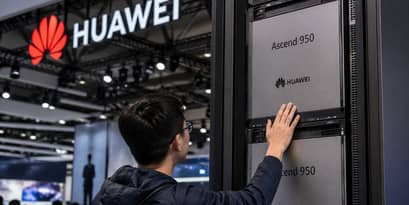
Huawei has unveiled its next-generation Ascend 950 AI infrastructure as the Chinese technology company accelerates development of domestic alternatives to Nvidia’s AI computing technology. The announcements were made during Huawei Connect 2026 in Shanghai, where the company presented new processors, interconnect technologies and large-scale AI computing systems designed for demanding training and inference workloads.
A major part of the platform is the Ascend 950DT, which Huawei says is designed for both AI model training and inference. The chip features 144GB of high-bandwidth memory, up to 4TB/s of memory bandwidth and 2TB/s of total interconnect bandwidth. Huawei plans to make the Ascend 950DT available in the fourth quarter of 2026, while a broader Ascend 950-based computing cluster is being prepared for commercial deployment.
Huawei is also focusing heavily on connecting large numbers of AI processors rather than relying only on improvements to individual chips. Its Atlas 950 SuperPoD is designed around thousands of Ascend 950DT processors and uses Huawei’s UnifiedBus interconnect technology. The company has described larger systems capable of connecting tens of thousands of processors, with the longer-term goal of linking up to one million AI processors into large computing systems.
The company’s strategy is also being supported by software development. Huawei says the Ascend ecosystem now supports more than 90 major third-party open-source projects and has expanded support for PyTorch. On September 30, Chinese AI company DeepSeek also announced a partnership with Huawei to develop programming infrastructure for Ascend processors, including compute and communication libraries and a 128-chip Ascend 950 supernode.
Huawei’s progress comes as it faces strong demand for its AI computing products in China. Huawei rotating chairman Eric Xu said the company currently cannot produce enough AI computing equipment to satisfy domestic demand and is therefore limiting overseas sales. The company is also preparing the next-generation Ascend 960DT, which has been moved forward to the first quarter of 2027. Together, the developments show Huawei’s broader effort to build a complete AI hardware and software ecosystem around its Ascend platform.




