
India Rejects Elon Musk’s Claim That Oligarchs Are Blocking Starlink
India has rejected Elon Musk’s allegation that unnamed oligarchs are blocking Starlink’s launch in the country, saying its satellite communications approval process is fair and non-discriminatory.

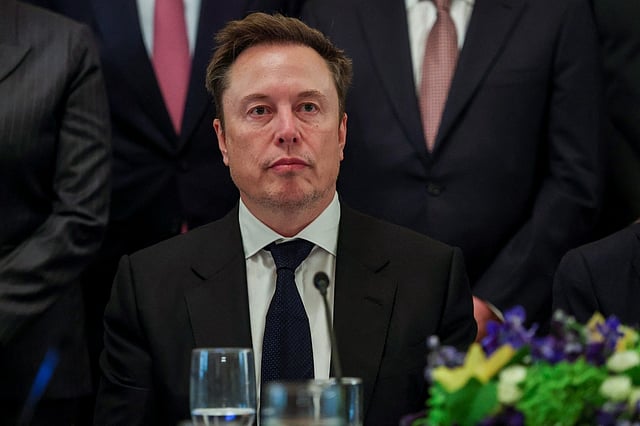
India has pushed back against Elon Musk’s claim that powerful business interests are preventing Starlink from launching its satellite internet service in the country. Musk alleged on X that “certain oligarchs” were trying to preserve a “monopolistic chokehold” over India’s internet market, but he did not identify the individuals or companies involved or provide evidence supporting the accusation. India’s Ministry of Communications subsequently rejected the allegation, saying the country’s regulatory framework applies fairly to satellite communication operators.
The dispute comes as Starlink continues to wait for final regulatory steps before it can begin commercial operations in one of the world’s largest telecommunications markets. India said Starlink and the two other major satellite operators, Reliance Jio and Bharti Airtel, are broadly at the same stage of the approval process. All three have received early approvals but are still undergoing security assessments and must complete further requirements before spectrum can be assigned.
Musk’s comments are significant because India’s telecommunications market is dominated by billionaire-led companies, particularly Reliance Jio, controlled by Mukesh Ambani, and Bharti Airtel, led by Sunil Mittal. Both companies have their own satellite internet ambitions and have secured regulatory approvals alongside Starlink. However, neither company has been publicly identified by Musk as one of the alleged “oligarchs,” and the Indian government has maintained that all licensed satellite operators are being treated under the same framework.
Starlink has spent years working toward entering India, with regulatory and security requirements contributing to delays. Indian authorities have previously raised security concerns involving Starlink equipment, including devices recovered during law-enforcement and military operations. The government has also emphasized that satellite internet providers must meet national security requirements before receiving spectrum, making the final authorization process more complicated than simply obtaining a commercial licence.
The disagreement highlights the strategic importance of India’s growing satellite broadband market. Starlink could potentially provide high-speed internet to areas that are difficult or expensive to serve through conventional fixed-line or mobile networks, while Indian telecom companies are seeking to develop competing satellite services. India’s government therefore faces the challenge of balancing competition, investment and connectivity with security and regulatory requirements. For now, however, officials maintain that Starlink is not being singled out and that its remaining approvals are part of the same process faced by other satellite operators.




