London Mayor’s Office Accuses Metropolitan Police of Rigging £50 Million AI Contract for Palantir
City Hall alleges procurement rules were manipulated to favor U.S. technology firm Palantir, intensifying a legal and political battle over the future of artificial intelligence in British policing.

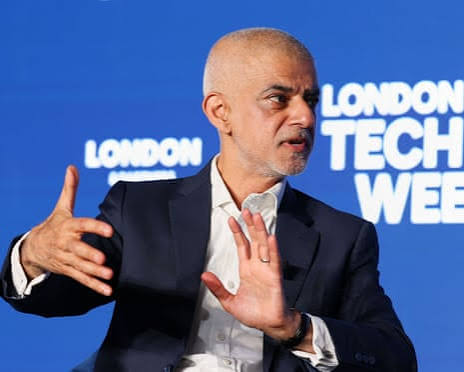
A major dispute over the use of artificial intelligence in law enforcement has erupted in the United Kingdom after the Mayor of London’s office accused the Metropolitan Police of manipulating a procurement process to ensure that U.S. technology company Palantir Technologies would secure a contract worth up to £50 million. The allegations have sparked legal action, political controversy, and renewed debate over how artificial intelligence should be deployed in policing.
The dispute centers on a proposed contract that would have seen Palantir provide the Metropolitan Police with an advanced AI-powered analytics platform known as Unified Operational Analytics. The system was intended to help officers process vast quantities of intelligence, identify links between criminal investigations, analyze evidence more efficiently, and improve operational decision-making through artificial intelligence and advanced data analysis.
However, before the agreement could be finalized, the Mayor’s Office for Policing and Crime (MOPAC) intervened and blocked the deal. City Hall argued that the procurement process had not been conducted fairly and claimed there had been serious failures in the way the contract was awarded. Officials alleged that the Metropolitan Police had effectively designed the procurement process around Palantir from the outset, limiting genuine competition from other technology providers.
According to documents presented during legal proceedings, lawyers representing the Mayor’s office argued that internal planning within the Metropolitan Police suggested officials intended Palantir to win the contract long before the competitive process had concluded. They claimed the procurement lacked adequate market testing and failed to provide sufficient evidence that competing suppliers had been given a fair opportunity to bid for the project. If proven, such actions could represent a significant breach of public procurement rules designed to ensure transparency, accountability, and value for taxpayers.
The proposed AI platform was expected to become one of the Metropolitan Police’s most significant technology upgrades in years. Modern policing generates enormous amounts of digital information, including crime reports, intelligence files, surveillance material, forensic evidence, communications records, and investigative data. AI systems such as Palantir’s are designed to rapidly analyze these complex datasets, helping investigators detect patterns, identify suspects, uncover criminal networks, and allocate police resources more efficiently.
Supporters of the project argue that artificial intelligence could dramatically improve policing by reducing administrative workloads, accelerating investigations, and enabling officers to respond more quickly to emerging threats. As criminal organizations increasingly exploit digital technologies, many law enforcement agencies around the world believe advanced AI tools are becoming essential for combating sophisticated cybercrime, organized crime, financial fraud, and terrorism.
Despite those potential benefits, the project has attracted significant criticism from privacy advocates, civil liberties organizations, and some politicians. Palantir has long been regarded as one of the world’s most controversial technology companies because of its extensive work with military organizations, intelligence agencies, immigration authorities, and law enforcement bodies. Critics argue that powerful AI-driven surveillance systems require exceptionally strong safeguards to prevent misuse, protect civil liberties, and ensure public accountability.
The Mayor’s office has repeatedly emphasized that its decision was based on procurement concerns rather than opposition to artificial intelligence itself. Officials insist they support responsible innovation within policing but argue that contracts involving sensitive public data must be awarded through transparent, competitive, and legally compliant processes. They also maintain that taxpayers deserve assurance that public money is spent fairly while encouraging genuine competition among technology suppliers.
Palantir has strongly rejected the allegations. The company argues that its technology would have delivered significant operational benefits to the Metropolitan Police and has accused City Hall of allowing political considerations to interfere with an important public safety initiative. Company executives have warned that blocking the contract could slow the modernization of Britain’s largest police force and reduce its ability to tackle increasingly complex criminal threats using modern technology.
The disagreement has now expanded into a legal battle. Palantir has initiated court proceedings challenging the decision to block the contract, arguing that the procurement process was conducted fairly and that the cancellation was unjustified. The outcome could have important implications not only for the company but also for how future AI procurement projects are managed across the United Kingdom’s public sector.
Beyond the immediate legal dispute, the controversy reflects a broader global debate surrounding artificial intelligence in public services. Governments around the world are increasingly exploring AI technologies to improve healthcare, transportation, education, taxation, and law enforcement. While these systems promise greater efficiency and improved public services, they also raise complex questions surrounding privacy, transparency, bias, accountability, cybersecurity, and democratic oversight.
Artificial intelligence is rapidly becoming a central component of modern policing. Predictive analytics, facial recognition, automated evidence analysis, natural language processing, and intelligent data integration are already being tested or deployed in many countries. Supporters argue these tools help police solve crimes more quickly and allocate resources more effectively, while critics warn they could increase surveillance, reinforce existing biases, or reduce transparency if deployed without proper safeguards.
The London dispute illustrates the challenges governments face as AI becomes more deeply integrated into public institutions. Even when there is broad agreement that artificial intelligence can improve efficiency, disagreements frequently arise over procurement practices, regulatory oversight, ethical standards, and public trust.
Industry analysts believe the case could become a landmark example of how governments balance technological innovation with legal accountability. If the courts ultimately determine that procurement rules were violated, the decision could reshape how public-sector AI contracts are awarded in the future. Conversely, if Palantir succeeds in its legal challenge, it may strengthen the position of major AI vendors competing for large government technology contracts.
Regardless of the final outcome, the controversy demonstrates that artificial intelligence is no longer simply a technological issue—it has become a legal, political, economic, and ethical challenge that governments worldwide must navigate carefully. As AI systems continue expanding into critical public services, ensuring transparency, fairness, and public confidence will be just as important as achieving technological advancement.