NAFDAC Uncovers Lagos Warehouse Storing Bottles for Suspected Fake Alcohol Production
Nigeria’s food and drug regulator has discovered more than 100 sacks of empty alcoholic beverage bottles in a residential building in Lagos, raising concerns that the containers could be reused to package counterfeit drinks.

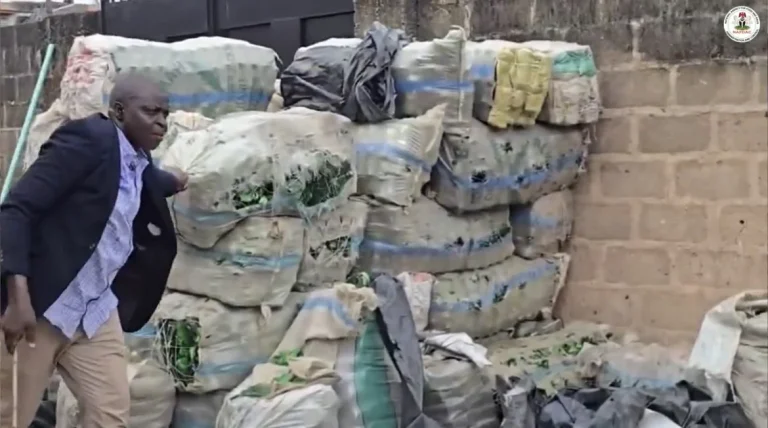
The National Agency for Food and Drug Administration and Control (NAFDAC) has uncovered a residential building in Lagos allegedly being used to store empty alcoholic beverage bottles suspected of being intended for counterfeit drink production. The discovery was made at a property located at 322B Meiran Road, Agbado, Oke-Odo, following intelligence received by the agency’s Investigation and Enforcement Directorate. According to NAFDAC, more than 100 sacks of empty bottles were found at the location. The bottles were reportedly stored in different sections of the building, with some covered by tarpaulins. The agency said the operation formed part of its ongoing efforts to identify and disrupt activities associated with the production and distribution of counterfeit alcoholic beverages.
Speaking in a video released by the agency, Kunle Ojo, an assistant director in NAFDAC’s Investigation and Enforcement Directorate, explained that investigators visited the property after receiving credible information about suspicious activities in the neighbourhood. He said the building was situated in a secluded residential area where large quantities of empty bottles had been stockpiled. According to Ojo, the containers came in different sizes and included bottles bearing labels associated with alcoholic beverage brands. Investigators suspected that the bottles were being collected and prepared for supply to people involved in producing counterfeit drinks. However, the discovery of the containers alone does not establish that every person connected to the property committed an offence; the suspected purpose of the stockpile was described by the agency during its investigation.
NAFDAC said the bottles were destroyed to prevent them from potentially being reused in the packaging of counterfeit alcoholic beverages. The concern is that empty branded bottles can be refilled with unregulated or potentially dangerous substances and then presented to consumers as genuine products. Such practices may make it difficult for customers, retailers and bar operators to distinguish authentic drinks from imitations. Counterfeit beverages can pose serious health risks when their contents are unknown, improperly manufactured or contaminated. By removing the stockpiled containers from circulation, the agency said it was seeking to prevent their possible reuse in illegal production activities and reduce the risks associated with counterfeit drinks entering the market.
The latest discovery comes amid a series of enforcement operations targeting suspected counterfeit beverages in Lagos. On October 13, NAFDAC operatives reportedly raided more than 20 makeshift stores at the Lagos International Trade Fair Complex in Ojo, where officials alleged that expired drinks were being revalidated for resale and other alcoholic beverages were being counterfeited. Two suspects were arrested during that separate operation, and the agency reported seizing products valued at more than ₦2 billion. The earlier raid and the discovery of the empty bottles highlight the different stages at which counterfeit products may enter the supply chain, from the preparation of packaging materials to the alleged relabelling, storage and distribution of drinks. The incidents have prompted renewed calls for stronger enforcement and public vigilance against suspected illegal beverage operations.
NAFDAC has urged Nigerians to report suspicious activities in their communities to the nearest agency office so that officials can investigate potential violations. Consumers are also advised to purchase alcoholic beverages from reputable sellers, inspect product seals and packaging, and avoid drinks whose labels or contents appear suspicious. Retailers and hospitality businesses should obtain products from legitimate suppliers and verify that the beverages they sell comply with applicable regulatory requirements. Although the Lagos discovery has not, by itself, established the full extent of any suspected counterfeiting network, the agency’s intervention underscores the public-health risks associated with the possible reuse of branded containers. NAFDAC says continued cooperation between residents, businesses and enforcement officials will be important in preventing counterfeit drinks from reaching consumers.