
NASA Accelerates Artemis Programme With New Plan to Return Astronauts to the Moon in 2028
The American space agency has unveiled further details of its accelerated lunar exploration strategy, with a major test mission planned for 2027 and a crewed Moon landing targeted for 2028.

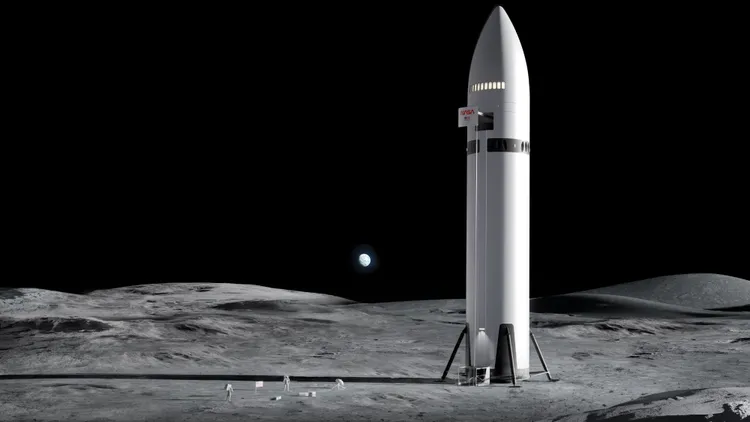
NASA has outlined a faster approach to its Artemis programme as it works towards returning astronauts to the lunar surface in 2028. The updated strategy, announced by NASA Administrator Jared Isaacman and other agency officials, focuses on reducing delays, improving mission safety and increasing the pace of space exploration. Under the revised schedule, Artemis III will launch in 2027 as a crewed test mission in Earth’s orbit, while Artemis IV is expected to deliver astronauts to the Moon in 2028.
The Artemis III mission will carry four astronauts aboard NASA’s Orion spacecraft for a planned 14-day journey in low Earth orbit. During the mission, astronauts will practise rendezvous, docking and operational procedures with lunar lander test vehicles developed by SpaceX and Blue Origin. The exercise is designed to test critical technologies and reduce risks before astronauts attempt an actual lunar landing. NASA says preparations for the mission are progressing, with some hardware processing timelines reduced by approximately 50 per cent.
For Artemis IV, NASA is pursuing two possible routes to the lunar surface using SpaceX’s Starship and Blue Origin’s Blue Moon lander. SpaceX plans to refuel Starship in Earth’s orbit before transporting astronauts towards the Moon, while Blue Origin intends to use transfer stages to move its lander into lunar orbit. However, questions remain about the number of refuelling launches required for Starship, with estimates ranging from 22 flights to Elon Musk’s projection of six to eight. NASA is also working with Axiom Space on lighter spacesuits for the programme’s initial lunar exploration missions.
The accelerated programme reflects America’s determination to establish a sustained human presence on the Moon as competition with China intensifies. NASA plans to explore the lunar South Pole, advance scientific research and develop the infrastructure needed for future missions to Mars. The agency is also pursuing multiple technological options to avoid depending on a single contractor for critical mission capabilities. If successful, the revised Artemis strategy could mark a major milestone in human space exploration and open a new chapter in lunar discovery.




