NASA’s $4 Billion Roman Space Telescope Prepares to Reveal the “Dark Universe”
NASA’s Nancy Grace Roman Space Telescope is preparing for launch on August 30, with scientists hoping its unprecedented wide-field observations will transform our understanding of dark energy, dark matter and distant worlds.

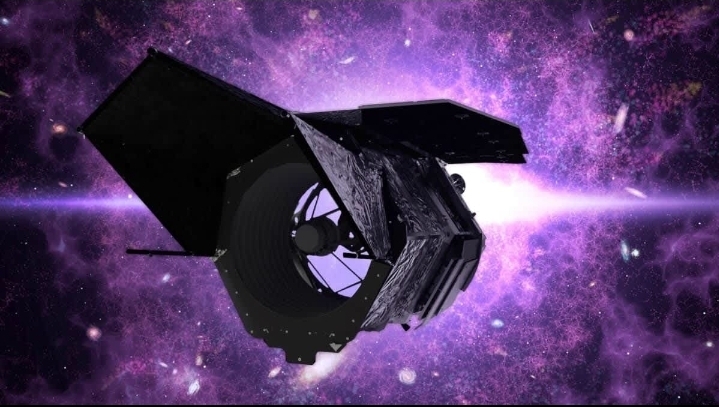
NASA is preparing to launch the Nancy Grace Roman Space Telescope, a roughly $4 billion flagship observatory designed to investigate some of the biggest unanswered questions in astronomy. The telescope is scheduled to launch aboard a SpaceX Falcon Heavy from Kennedy Space Center in Florida on August 30, 2026. NASA describes Roman as a mission focused on dark energy, exoplanets and fundamental astrophysics.
One of Roman’s most important advantages is its enormous field of view. Its Wide Field Instrument will capture an area of sky about 100 times larger than Hubble can observe in a single image, while maintaining comparable sensitivity and infrared resolution. This will allow scientists to survey huge portions of the universe much faster, potentially studying billions of galaxies and building an unprecedented map of cosmic structure.
A central objective is understanding dark energy, the mysterious phenomenon associated with the accelerating expansion of the universe. Roman will examine how cosmic expansion has changed over time and study gravitational effects across enormous numbers of galaxies. Scientists hope these measurements can determine whether dark energy behaves like a constant feature of the universe or whether our current understanding of gravity and cosmology needs revision.
Roman will also search for exoplanets, including planets that are difficult to detect using conventional techniques. Its instruments will allow astronomers to study distant planetary systems and potentially identify tens of thousands of new worlds. The telescope’s coronagraph will also demonstrate technology for directly imaging faint objects near bright stars, providing another way to study planets beyond our solar system.
After launch, Roman will travel roughly 1.5 million kilometres from Earth to the Sun-Earth L2 region. Following its journey and commissioning period, the observatory is expected to begin a planned five-year science mission, with the possibility of an extension. Rather than replacing Hubble or the James Webb Space Telescope, Roman is designed to complement them by providing an exceptionally wide view of the cosmos.
The significance of Roman is therefore not simply that NASA is launching another powerful telescope. Its ability to survey enormous areas of the sky could reveal patterns that smaller, narrower observations cannot easily detect. If successful, the mission could provide crucial evidence about what is driving the universe’s expansion, how dark matter is distributed and how planetary systems form, potentially changing our understanding of the universe.