
Nvidia CEO Jensen Huang Says AI Market Turmoil Will Pass
Nvidia CEO Jensen Huang remains confident in the long-term future of artificial intelligence, arguing that recent stock-market volatility will not derail the technology’s growth despite mounting concerns over AI spending, debt and company valuations.

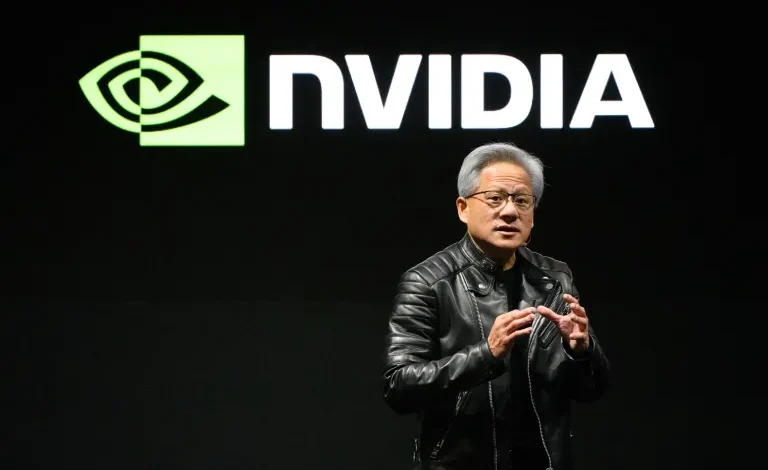
Nvidia CEO Jensen Huang has dismissed concerns surrounding the recent downturn in artificial intelligence stocks, saying the market turbulence will eventually pass as AI continues to transform industries worldwide. Speaking to Bloomberg in Berlin on October 16, 2026, Huang expressed confidence that the long-term benefits of artificial intelligence would outweigh current investor concerns. His comments came after a difficult period for technology shares, with investors reassessing whether the enormous sums being invested in AI infrastructure can generate sufficient returns. Huang maintained that the industry remains in the early stages of a major technological transformation, arguing that AI will have a positive impact across businesses, economies and countries. His remarks reflect Nvidia’s position that demand for AI computing will continue to expand despite short-term financial uncertainty.
The market concerns have emerged after several weeks of pressure on technology stocks and companies involved in building AI infrastructure. Investors have become increasingly cautious about the cost of constructing data centres, purchasing advanced processors and securing the electricity needed to operate large computing facilities. Nvidia, which supplies graphics processing units used to train and operate many leading AI models, has been at the centre of this debate. Although the company has benefited from strong demand for its chips, its shares have also come under pressure as investors question whether the industry’s rapid expansion can continue at its current pace. The recent sell-off demonstrates that even companies benefiting from AI growth remain vulnerable to changes in investor sentiment and broader economic conditions.
Huang’s confidence is based partly on his belief that artificial intelligence is already creating economic value rather than remaining an experimental technology. Companies are increasingly using AI to automate repetitive tasks, improve software development, analyse large volumes of information and support customer services. AI systems are also becoming more capable of performing complex tasks through autonomous agents and specialised computing infrastructure. Nvidia believes these developments will encourage businesses to invest further in AI hardware and software. As adoption spreads across industries, demand for computing power could increase, creating additional opportunities for semiconductor manufacturers and data-centre operators. However, the pace of adoption and the financial returns from these investments will vary between businesses, meaning that strong demand for AI technology does not guarantee that every company in the sector will succeed.
Despite Huang’s optimism, financial risks remain a significant concern for investors. AI infrastructure companies are committing billions of dollars to data centres, chips, networking equipment and energy supplies, with some relying heavily on borrowed money to finance expansion. Reuters reported that rising interest rates and weakening equity markets have forced several companies to reconsider fundraising plans, while concerns about heavily indebted computing providers have added pressure to the sector. These developments have intensified questions about whether projected AI revenues will justify current infrastructure spending. If demand grows more slowly than expected or financing becomes more expensive, some companies could struggle to meet their financial obligations. The industry therefore faces a challenge in balancing ambitious expansion plans with sustainable business models and realistic expectations of future revenue.
Huang’s latest comments underline the difference between short-term market performance and his long-term outlook for AI. Nvidia remains a central supplier to the AI industry, but its future performance will depend on continued demand, competition, technological progress and customers’ ability to finance increasingly expensive computing systems. Investors will also be watching whether businesses can convert AI adoption into measurable productivity improvements and profitable services. While Huang believes the current turmoil will pass, his assessment does not eliminate the possibility of further market volatility or losses for individual companies. The coming months will provide a clearer indication of whether AI spending can maintain its momentum and deliver the returns investors expect. For now, Nvidia’s chief executive is urging the market to focus on the technology’s long-term potential rather than allowing temporary financial turbulence to overshadow its broader possibilities.




