
OpenAI Plans to Buy Google’s AI Chips as Competition With Nvidia Intensifies
OpenAI is reportedly planning to purchase Google’s specialised AI processors as demand for computing power surges, potentially strengthening Google’s chip business and helping the ChatGPT developer diversify beyond Nvidia.

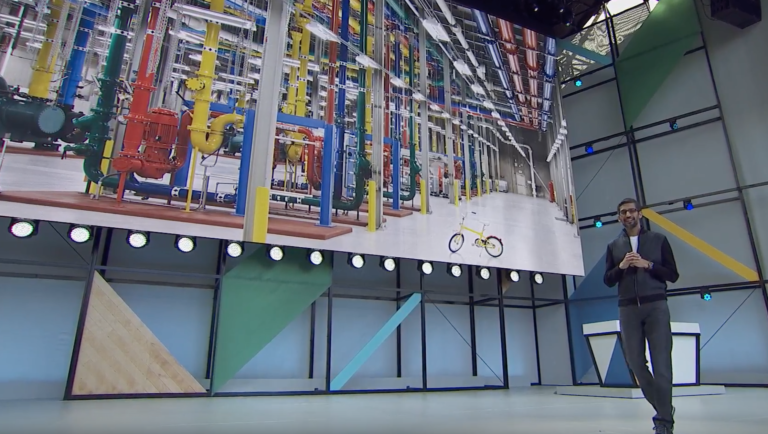
OpenAI, the company behind ChatGPT, is reportedly planning to buy artificial intelligence chips developed by Google as it seeks additional computing capacity to train and operate its increasingly advanced AI models. The Information reported the proposed purchase on October 27, 2026, citing a person familiar with the matter. Reuters subsequently reported the development, although neither OpenAI nor Google publicly confirmed the details of the proposed transaction. The financial terms, number of processors and expected delivery schedule have not been disclosed. The reported plan represents a notable development in the relationship between the two technology companies, which compete in AI products and search but are also developing closer commercial ties. OpenAI has substantial computing requirements as millions of users and businesses rely on its AI services. Purchasing processors from another major technology company could help it expand capacity and reduce its dependence on a single hardware supplier.
The processors at the centre of the reported deal are Google’s Tensor Processing Units, commonly known as TPUs. Unlike general-purpose processors, TPUs are designed specifically to accelerate the mathematical operations required by machine-learning systems. They can support AI model training and inference, the process of generating responses after a model has been trained. Google has developed TPUs for more than a decade and initially used them to improve its own services, including search and AI applications. The company has increasingly opened its chip technology to external customers as demand for AI computing expands. TPUs are becoming an alternative to graphics processing units produced by Nvidia, whose hardware has dominated much of the market for advanced AI computing. Google’s ability to sell or provide access to its processors could create a new revenue stream while giving customers additional options for running demanding AI workloads.
For OpenAI, diversifying its hardware suppliers could offer several strategic advantages. The company relies heavily on Nvidia GPUs to develop and operate its AI models, making access to sufficient computing capacity a major business priority. Adding Google’s TPUs could provide another source of processing power and potentially improve efficiency for workloads that are well suited to the hardware. A broader range of suppliers could also help OpenAI manage infrastructure costs as usage grows. However, switching between chip platforms is not straightforward. AI models and software must often be optimised for the specific architecture, programming tools and memory characteristics of the hardware being used. OpenAI has reportedly been recruiting an engineer to lead the optimisation of its advanced models on TPUs, suggesting that the company is investing in the technical expertise required to use Google’s processors effectively. The reported purchase does not mean OpenAI will stop using Nvidia chips; rather, it could indicate a strategy of combining several hardware platforms to meet different computing needs.
The potential agreement would also represent a significant opportunity for Google as it attempts to strengthen its position in the AI semiconductor market. Google competes with Nvidia through its TPU technology while also operating Google Cloud, which provides computing infrastructure to businesses and AI developers. The company has already attracted customers interested in alternatives to Nvidia’s hardware, including Anthropic, another major AI developer. Google has also been expanding access to TPUs through external cloud providers, potentially increasing the reach of its technology beyond its own data centres. A major purchase by OpenAI would be particularly notable because the two companies compete directly in several AI markets. Nevertheless, important details remain uncertain: public reporting has not established the transaction’s value, whether all processors would be purchased outright or how and where the hardware would be deployed. Until the companies provide confirmation, the proposed deal should be treated as a reported plan rather than a completed transaction.
The development reflects a broader transformation in the global AI industry, where access to computing infrastructure is becoming as strategically important as the development of advanced models. Major technology companies are investing heavily in data centres, specialised processors and energy infrastructure to support the growing demand for AI services. OpenAI is also developing its own custom AI chip with Broadcom, which it has said it plans to deploy by the end of 2026. This parallel effort suggests that the company is exploring several ways to secure the hardware needed for future growth. For Google, wider adoption of TPUs could strengthen its semiconductor business and challenge Nvidia’s dominance in selected workloads. For OpenAI, access to more diverse computing resources could support future development and deployment. The eventual impact will depend on the scale of the purchase, the performance and cost of the processors, and whether the reported plan proceeds. As the AI race accelerates, competition is no longer limited to chatbots and software: it increasingly includes the chips and infrastructure powering the next generation of artificial intelligence.




