
Volvo Expands NVIDIA Partnership to Bring Advanced AI Driving Technology to Future Cars
Volvo Cars is expanding its partnership with NVIDIA to develop more advanced driver-assistance and automated-driving systems, with the first vehicles using the new technology expected before 2030.

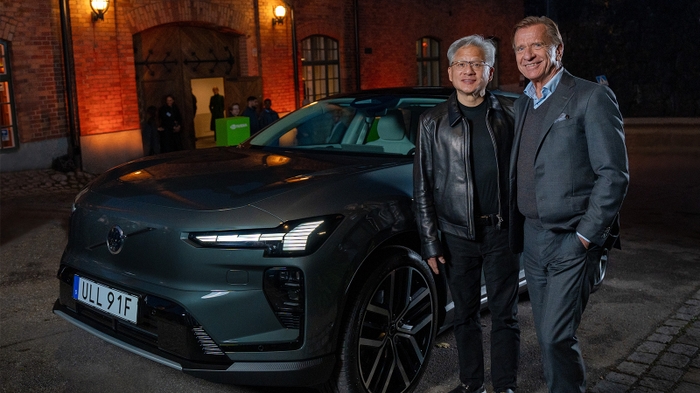
Volvo Cars has announced an expansion of its long-standing partnership with NVIDIA as the Swedish-designed automaker works to improve vehicle safety through artificial intelligence and advanced computing. Announced on October 15, 2026, the agreement will combine Volvo’s experience in vehicle safety and engineering with NVIDIA’s AI technologies to develop a new generation of automated-driving systems. The companies aim to help future Volvo vehicles navigate more complex environments, including motorways, busy city streets and parking areas. The expanded collaboration builds on a relationship that began in 2017 and reflects the automotive industry’s growing shift towards software-defined vehicles, in which computing platforms and AI systems play an increasingly important role in driving functions.
Under the agreement, Volvo will integrate three key NVIDIA technologies: the Hyperion sensor and computing architecture, the Halos safety system and the Alpamayo autonomous-driving software stack. Hyperion provides the computing and sensor framework that enables a vehicle to process information about its surroundings. Alpamayo combines AI models, datasets and development tools designed to help vehicles interpret complex road situations and make driving decisions. Halos provides an additional safety framework for developing and evaluating AI-powered driving systems. Volvo intends to combine these technologies with its own vehicle safety systems and engineering expertise to create a more integrated approach to automated driving. The companies have not disclosed the financial value of the expanded partnership.
One of the main goals is to introduce increasingly advanced hands-free driving capabilities. Volvo plans to begin with supervised driving features, meaning drivers will remain responsible for the vehicle and must be prepared to intervene when necessary. The company intends to gradually expand these capabilities towards more advanced driving assistance on highways and in urban environments. According to Reuters, the technology is expected to appear in Volvo vehicles before 2030 and launch in multiple regions, excluding China. The first vehicle to feature the new technology has not yet been officially identified. Volvo has also indicated that it wants to make the technology available across different vehicle categories rather than restricting it exclusively to its most expensive models.
Safety remains a central issue as automakers compete to introduce increasingly capable automated-driving systems. AI-powered vehicles must interpret changing traffic conditions, recognise pedestrians and other road users, and respond appropriately to unexpected events. Volvo says its experience in vehicle safety research will be combined with NVIDIA’s computing and AI capabilities to improve how future vehicles perceive their surroundings and make driving decisions. NVIDIA’s approach also combines AI-based systems with conventional software and multiple sensor inputs, rather than depending entirely on a single model. Nevertheless, the reliability of automated-driving technology must be demonstrated through testing and regulatory approval. Drivers should not assume that hands-free features make a vehicle fully autonomous or remove their responsibility to remain attentive when required by the system.
The expanded partnership also highlights NVIDIA’s growing influence beyond its traditional business of supplying chips for data centres and AI infrastructure. The company is increasingly working directly with automakers to provide the computing platforms, software and development tools needed for next-generation vehicles. Volvo already uses NVIDIA computing technology in its battery-electric vehicles, and the expanded agreement could help standardise more of its future vehicle platforms around NVIDIA’s technology. The move comes as companies such as Mercedes-Benz and other global automakers pursue more advanced driving assistance and automation. For NVIDIA, these partnerships offer an opportunity to establish its technology as an important foundation for future automotive software systems, while carmakers seek to differentiate their vehicles through improved safety and convenience.
Although the agreement represents a significant step in Volvo’s automated-driving plans, many details remain undisclosed, including the exact launch model, pricing and final feature availability. The technology will also need to meet regulatory requirements in the markets where it is introduced. Its success will depend on whether the combined systems can deliver dependable performance across different road conditions while maintaining appropriate safeguards for drivers and other road users. If the development proceeds as planned, future Volvo vehicles could offer more advanced assistance for journeys that involve motorways, urban traffic and parking. For now, the partnership signals a longer-term commitment by Volvo and NVIDIA to make AI-powered driving more capable while keeping safety at the centre of the development process.




