
Peter Thiel Calls Pope Leo a ‘Useful Idiot’ for China Over AI
Billionaire investor Peter Thiel has criticised Pope Leo XIV over his warnings about artificial intelligence, arguing that the Pope’s position could indirectly benefit China in the global AI competition.

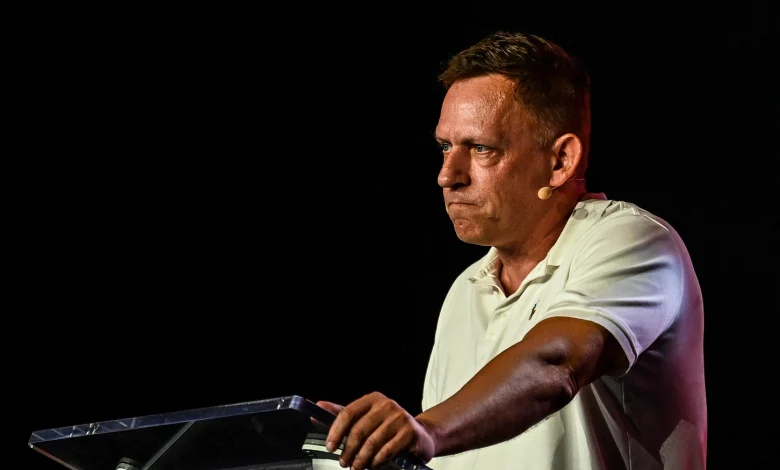
Peter Thiel, the billionaire investor and co-founder of Palantir, has sharply criticised Pope Leo XIV over the pontiff’s approach to artificial intelligence. During an interview with Axel Springer CEO Mathias Döpfner, Thiel described the Pope’s May document on AI as “anti-AI” and argued that concerns about the technology could weaken the United States in its competition with China.
Thiel went further by saying that while he did not believe Pope Leo was an agent of the Chinese Communist Party, the Pope was “at least acting as a useful idiot for the CCP.” The remark was made in the context of Thiel’s argument that Chinese authorities would not be influenced by warnings from the Pope, while people in the United States and other Western countries might pay attention to them.
Pope Leo has repeatedly raised concerns about the potential consequences of artificial intelligence. His first major document, released in May, discussed issues including employment, human dignity and the use of AI in warfare. More recently, on September 21, the Pope called for AI systems that promote peace and unity rather than increasing division and conflict.
Thiel also argued that the United States should take its technological competition with China seriously. At the same time, he said he did not believe China was primarily responsible for growing opposition to AI in America. Instead, he argued that much of the backlash was being generated within the United States itself. He described China as a fast follower in AI development while saying that Europe remained considerably behind both the United States and China.
The comments came as Thiel received the 2026 Axel Springer Award in Berlin for his contributions to digital transformation. His remarks highlight a broader debate surrounding AI: while technology companies and investors emphasise the potential economic and strategic benefits of rapid development, religious leaders and other groups have raised concerns about its effects on employment, human dignity, misinformation, warfare and society.




