Rubin Observatory Captures Over 500,000 Galaxies in Record-Breaking Deep Space Image
World's largest digital camera delivers one of the deepest views of the universe yet, revealing more than half a million galaxies and opening a new era of astronomical discovery.

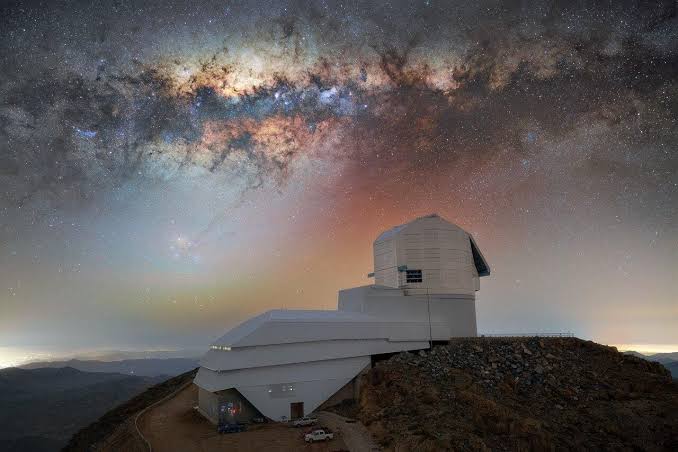
The NSF–DOE Vera C. Rubin Observatory has released an extraordinary new deep-space image containing more than 500,000 galaxies and over 50,000 stars, captured with the world’s largest digital camera. The stunning 3,200-megapixel composite image focuses on the famous COSMOS Field, one of the most extensively studied regions of the sky, and showcases galaxies spanning billions of years of cosmic history. The image is part of the observatory’s Early Data Preview 2 and demonstrates the remarkable capabilities of the Rubin Observatory’s Legacy Survey of Space and Time (LSST), a decade-long mission designed to create the most detailed map of the southern sky ever assembled.
The image was created by combining hundreds of individual observations collected between April 2025 and January 2026 during the LSST Camera’s testing phase. Weighing nearly three tonnes, the camera is the largest digital camera ever built and is capable of recording an unprecedented level of detail across vast areas of the sky. Scientists say the new image reveals an enormous variety of celestial objects, including spiral galaxies, elliptical galaxies, merging galaxies, distant galaxy clusters, and only a handful of foreground stars from our own Milky Way, providing an exceptionally clear window into the distant universe.
Researchers say this achievement is only the beginning. Throughout its 10-year survey, the Rubin Observatory will repeatedly image the same regions of the sky, allowing astronomers to observe changes over time. This continuous monitoring will enable scientists to discover exploding stars, track potentially hazardous asteroids, study variable stars, and investigate mysterious cosmic phenomena that appear and disappear. The observatory is also expected to detect billions of galaxies, catalog millions of supernovae, and significantly improve our understanding of dark matter and dark energy.
The observatory’s advanced technology is expected to transform astronomy by producing an unprecedented stream of scientific data. Each night, it will generate millions of alerts highlighting newly detected or changing objects across the sky, allowing astronomers worldwide to respond quickly to important discoveries. The enormous dataset will also support research into galaxy evolution, black holes, the structure of the Milky Way, and the formation of planetary systems, making Rubin one of the most influential scientific facilities of the coming decade.
The release of this remarkable image marks a major milestone in humanity’s exploration of the universe. By combining the world’s largest digital camera with one of the most ambitious sky surveys ever attempted, the Vera C. Rubin Observatory is giving scientists an unprecedented view of the cosmos and laying the foundation for discoveries that could reshape our understanding of space for years to come. As the observatory continues its decade-long mission, researchers expect countless new galaxies, asteroids, supernovae, and other cosmic phenomena to emerge from its ever-growing archive of observations.