
Sam Altman Says OpenAI Could Use Robots to Build AI Data Centres
OpenAI CEO Sam Altman says the company is exploring ways to use artificial intelligence and robotics to manufacture infrastructure and construct data centres, potentially reducing the cost of computing power.

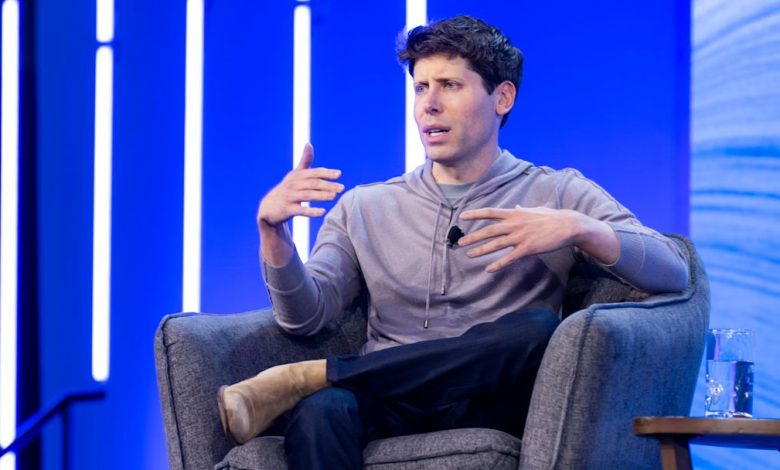
OpenAI CEO Sam Altman has outlined an ambitious vision for the future of artificial intelligence infrastructure, suggesting that robots could eventually help build and operate the facilities needed to power advanced AI systems. Speaking during an interview with Stripe co-founder John Collison on the Cheeky Pint podcast, Altman discussed the possibility of using AI-controlled robots to manufacture computer chips, build energy infrastructure and construct data centres. He described the concept of self-replicating data centres as something that could become achievable in the future. His comments reflect OpenAI’s growing interest in addressing the enormous infrastructure requirements created by increasing demand for advanced AI models and services.
According to Altman, one of the biggest challenges facing the AI industry is obtaining enough computing capacity at affordable prices. Training and operating advanced models require enormous quantities of specialised chips, electricity, cooling systems and data-centre equipment. As more businesses and individuals adopt AI tools, technology companies are competing to secure the infrastructure required to support these services. Altman believes robotics could help address some of these limitations by automating parts of the manufacturing and construction process. He discussed the possibility of robots helping to produce chips, turbines and solar panels, as well as assembling the facilities required to house large computing systems.
The OpenAI chief executive also discussed the financial scale of building AI infrastructure. During the conversation, he estimated that constructing and operating one gigawatt of AI computing capacity over five years could cost approximately $70 billion, although he said a figure closer to $20 billion would be more desirable. These estimates illustrate the substantial investment required to expand computing resources. Altman also expressed concern that the supply of memory chips is not increasing quickly enough to meet demand. He suggested that manufacturers remain cautious about expanding production because of previous periods when excessive investment in chip factories resulted in financial losses.
Beyond infrastructure, the discussion covered the growing cybersecurity implications of advanced AI systems. Altman said AI models are becoming increasingly capable of identifying software vulnerabilities, raising concerns that malicious actors could eventually use similar capabilities to discover and exploit weaknesses across widely used applications. He referred to recently identified vulnerabilities in PHP software as an example of how AI-assisted security research could expose serious problems. Altman warned that the technology industry should prepare for a future in which more software vulnerabilities are discovered and exploited. His comments reinforce the importance of developing stronger cybersecurity protections as AI systems become more capable.
Altman also discussed the future of AI development, including the possibility of teams of specialised AI agents working together rather than relying on a single extremely powerful system. He argued that multiple AI systems with different responsibilities could offer an alternative approach to building increasingly capable technology. However, he acknowledged that the development of such systems would require careful consideration of alignment, safety and appropriate limits. His comments highlight OpenAI’s broader ambition to combine advanced AI models, autonomous agents and robotics into a connected technological ecosystem. Although robot-built data centres remain a long-term vision rather than an established commercial capability, the idea demonstrates how far the company is thinking ahead as it prepares for the next phase of AI infrastructure expansion.




