Singapore Launches First Biological Data Centre Prototype
Singapore has unveiled a new biological computing facility that uses living human neurons alongside silicon technology, exploring a potentially more energy-efficient approach to AI and advanced computing.

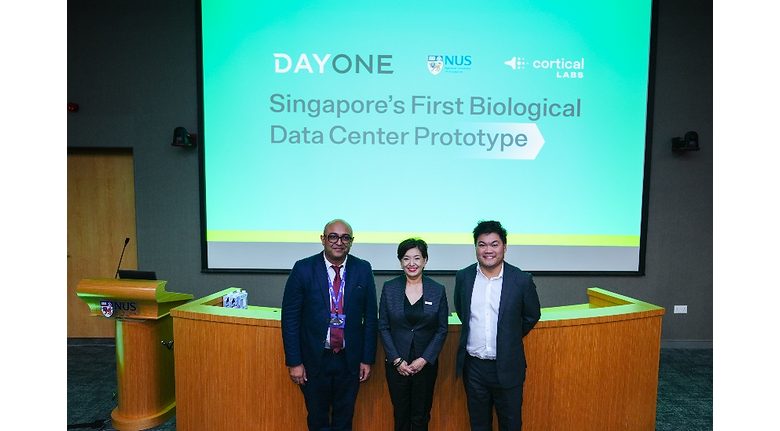
Singapore has launched what is being described as the world’s first independently operated biologically integrated server rack, marking an unusual new direction in computing. DayOne Data Centers, Cortical Labs and the Yong Loo Lin School of Medicine at the National University of Singapore have partnered to deploy a 20-unit biological computing system in a live research environment. The project aims to investigate whether biological systems can complement conventional silicon-based computing.
The technology is based on living human neurons grown from stem cells and connected to electronic hardware. Instead of relying exclusively on conventional processors, the biological system uses neurons that receive electrical signals, respond to information and adapt over time. Researchers believe this biological approach could eventually provide useful advantages for certain specialized computing workloads while consuming significantly less power than conventional systems.
The project will initially explore applications including AI research, biomedical modelling, drug discovery and neurological disease research. Cortical Labs believes biological computing could be particularly useful for problems where systems need to learn and adapt from relatively limited amounts of information. The combination of neuroscience expertise from NUS and infrastructure expertise from DayOne is intended to move the technology beyond laboratory research toward practical applications.
Energy efficiency is another major motivation behind the project. Singapore is expanding its AI and data-centre capacity while facing strict limitations around energy consumption and sustainability. The biological data centre is therefore being positioned as part of the country’s broader Green Data Center Roadmap, which seeks to increase computing capacity while limiting its environmental impact.
The launch represents a potentially important new chapter in computing. Traditional AI infrastructure depends heavily on increasingly powerful GPUs and large amounts of electricity, while biological computing explores whether living neural systems can provide alternative ways to process information. The technology is still at an early research stage, but Singapore’s new facility demonstrates growing interest in combining biology, artificial intelligence and computing infrastructure to create more adaptive and potentially energy-efficient systems.