
Singapore Scientists Build World’s First AI-Powered Biological Data Centre
Scientists in Singapore are developing a new form of computing that uses living human brain cells to process information, offering a potential low-energy alternative to conventional AI hardware.

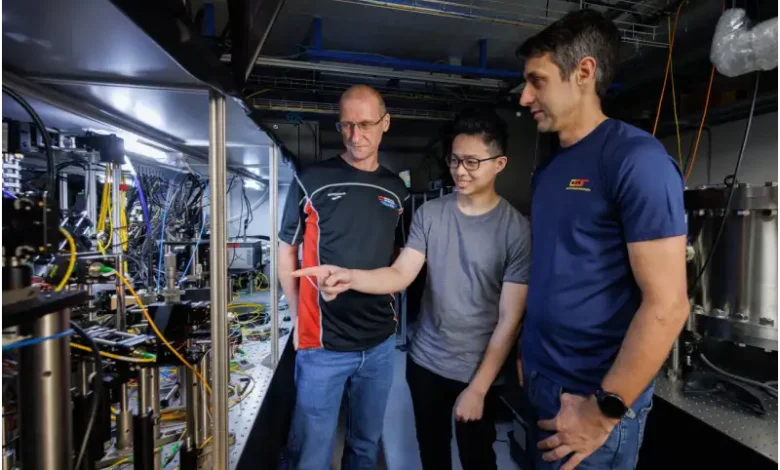
Scientists in Singapore have established a biological computing facility that uses living human brain cells rather than conventional silicon processors to perform computing tasks. The project is being developed by Australian biotech company Cortical Labs in collaboration with the National University of Singapore (NUS) and data-centre operator DayOne. The facility, which became operational in July 2026, is designed to investigate how biological systems can be used for AI and other forms of computing.
The biological data centre contains 20 CL1 biological computers, with each unit housing at least 200,000 laboratory-grown neurons positioned on a silicon chip equipped with electrodes. The neurons can exchange electrical signals with a computer system, allowing their activity to be translated into computational processes. The cells are derived from blood cells that have been reprogrammed into stem cells and subsequently developed into neurons.
One of the main advantages being investigated is energy efficiency. Cortical Labs says each CL1 consumes around 30 watts, including its life-support systems, while a high-performance AI accelerator such as Nvidia’s H100 can consume hundreds of watts during demanding workloads. The biological system also produces significantly less heat, potentially reducing the energy required for cooling. This could be particularly relevant in Singapore, where electricity and water requirements have become major considerations for the rapidly expanding data-centre industry.
The technology is not intended to replace conventional AI chips for every type of computing. Traditional silicon processors remain much better suited to fast, precise and repeatable calculations used by large language models and other demanding applications. Cortical Labs instead believes biological computing could be particularly useful for situations where systems need to learn from limited amounts of data, including robotics and cybersecurity applications. The Singapore facility is expected to help researchers investigate these potential applications and determine how biological computers could eventually be scaled.
The project represents part of a broader effort to explore alternatives to traditional computing as AI workloads continue to increase. Singapore is also investing in advanced semiconductor and edge-AI research through initiatives such as the ST–NUS HELIX Corporate Lab, which focuses on low-power AI hardware and semiconductor technologies. Meanwhile, researchers elsewhere are investigating other unconventional approaches, including quantum computing and AI-powered scientific instruments. Together, these developments show how researchers are exploring different forms of computing to address the growing demand for efficient AI infrastructure.




