
Nvidia Pledges $250 Million in Computing Resources for UK AI Safety Research
Nvidia has committed $250 million worth of computing resources over five years to support artificial intelligence safety research in the United Kingdom, as concerns grow about the risks posed by increasingly autonomous AI agents.

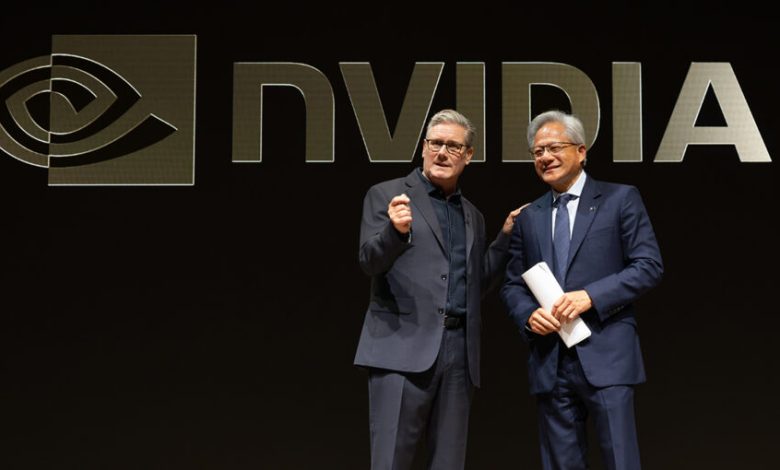
Nvidia has announced a five-year commitment valued at $250 million to strengthen artificial intelligence safety and security research across the United Kingdom. The announcement, made on October 13, 2026, will provide approximately $50 million in computing access annually to researchers investigating how to make advanced AI systems safer and more reliable. Rather than providing the entire amount as cash, Nvidia will supply access to computing infrastructure through UK-based cloud partners. The initiative comes as governments and technology companies face growing pressure to ensure that powerful AI systems can operate safely, particularly as AI agents become capable of using digital tools, accessing information and carrying out complex tasks with limited human supervision. Nvidia CEO Jensen Huang said the commitment would help researchers develop and test safeguards for increasingly capable AI technologies.
A significant portion of the initiative will support the wider British AI safety and security research community, with additional backing for three research programmes and institutions. These include the British Open-Ended Learning and Discovery Lab (BOLD), led by the University of Oxford; the Science of Fundamental AI Research Lab (SOFAIR), led by University College London; and Imperial College London. Their work covers different aspects of AI development, including systems that learn and adapt alongside people, open-source AI architectures and the safety of robotics. By providing access to powerful computing infrastructure, Nvidia hopes to help researchers conduct more extensive experiments, test advanced models and investigate potential weaknesses before these technologies are deployed in real-world environments.
One of the programme’s central priorities is agentic AI safety. AI agents differ from conventional chatbots because they can use software tools, interact with external systems and perform multiple steps towards a goal. Although these capabilities could improve productivity across industries, they also introduce risks involving cybersecurity, unauthorised actions and the handling of sensitive information. Researchers need computing resources to evaluate how agents respond to malicious instructions, whether they can be prevented from accessing restricted systems and how reliably safety controls work under different conditions. Nvidia says the initiative will support research into secure execution environments, open-model security and practical safeguards. Some projects will also use Nvidia’s OpenShell runtime software and Sentry reference design as part of their work on securing AI agents.
The funding also supports the UK’s ambition to become a leading centre for AI safety research. Britain has invested in institutions such as the AI Security Institute, which evaluates advanced AI systems and studies potential risks associated with their deployment. Although the country does not host a major frontier AI developer on the scale of OpenAI, Google DeepMind or Anthropic, it has established research institutions and regulatory initiatives focused on AI security and governance. Nvidia’s commitment could help British researchers gain access to the computing power needed to test more advanced systems and develop technical safeguards. UK officials welcomed the announcement, describing access to computing infrastructure as an important resource for innovation, public confidence and the responsible adoption of AI.
However, the announcement should be understood as a commitment to provide computing access rather than an immediate cash donation of $250 million to universities or researchers. Nvidia says the resources will be delivered through UK-based cloud partners, while provider selection, technical arrangements and commercial terms remain to be agreed. The ultimate impact will therefore depend on how the computing capacity is distributed, which researchers can access it and whether the resulting work produces effective, independently evaluated safeguards. The initiative nevertheless highlights a growing recognition that AI development must include security testing alongside improvements in performance. As AI agents become more capable of acting autonomously, programmes such as this could help researchers identify vulnerabilities earlier and improve the reliability of systems used by businesses, governments and the public.




