Apple Set to Unveil First Touchscreen OLED MacBook Pro on October 28
Apple is preparing to introduce redesigned 14-inch and 16-inch MacBook Pro models featuring OLED touchscreens, a slimmer design and a Dynamic Island-style display cutout at its upcoming October 28 product showcase.

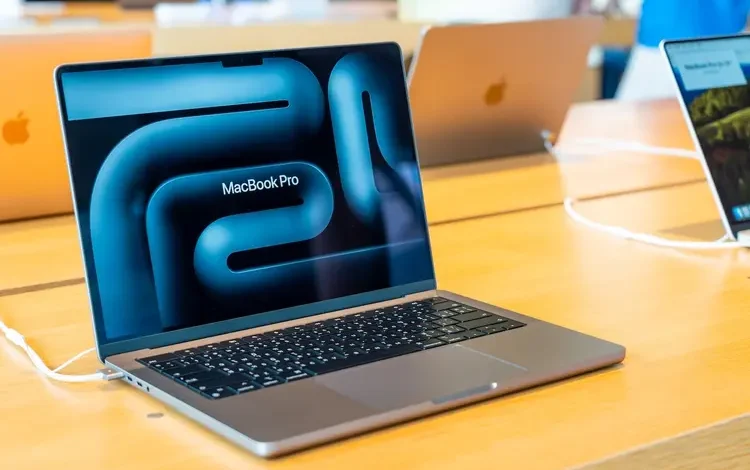
Apple is reportedly preparing to unveil its first MacBook Pro with a touchscreen display, marking a major change in the company’s long-standing approach to laptop design. According to Bloomberg’s Mark Gurman, Apple plans to announce redesigned 14-inch and 16-inch MacBook Pro models on Wednesday, October 28, 2026. The announcement is expected to take place alongside the company’s “Pro and tell” product showcase in Los Angeles. The new laptops are expected to introduce touch-enabled OLED displays, allowing users to interact directly with on-screen content while retaining the traditional keyboard and trackpad. If the reports prove accurate, the launch would represent one of the most significant changes to the MacBook Pro lineup in several years.
One of the most notable upgrades is the reported switch from mini-LED displays to OLED technology. OLED screens can deliver deeper blacks, stronger contrast and rich colours because individual pixels can switch off completely when displaying black. These characteristics could benefit professionals who work with photography, video editing, graphic design and other colour-sensitive applications. Apple is also reportedly making the new laptops thinner and lighter than existing models, improving portability without abandoning the premium design associated with the MacBook Pro. The new displays are expected to retain the familiar screen sizes of 14 inches and 16 inches, giving customers options suited to both mobile work and larger-screen productivity.
Another anticipated change is the replacement of the traditional display notch with an iPhone-style Dynamic Island. This design could create new opportunities for displaying notifications, background activities and contextual controls near the top of the screen. Reports also indicate that Apple is adapting macOS to make touch interaction more practical. The interface could display larger controls or position additional menus around a user’s finger when the screen is touched. Importantly, Apple is reportedly treating touchscreen support as an additional input method rather than a replacement for the keyboard and trackpad. This approach would allow users to switch naturally between traditional laptop controls and direct interaction with the display, depending on the task.
Despite the major display and design changes, the new high-end MacBook Pro models are reportedly expected to use Apple’s existing M5 Pro and M5 Max processors rather than introducing new M6 Pro and M6 Max chips. These processors were released earlier in 2026 and are already designed for demanding professional workloads. Apple is also reportedly preparing an updated iMac and an entry-level 14-inch MacBook Pro featuring an M6 chip. The company could therefore use the October product announcements to refresh several parts of its computer lineup at once. However, Apple has not publicly confirmed all the reported specifications, and details about performance, battery life, memory configurations and regional availability remain subject to the official announcement.
The introduction of an OLED touchscreen could also push MacBook Pro prices higher. Current premium models already occupy the expensive end of the laptop market, and reports suggest that the new displays and redesigned hardware could increase starting prices by as much as $500 in the United States. The existing mini-LED models are reportedly expected to remain available for a period, potentially giving buyers a less expensive alternative. For Apple, the challenge will be to demonstrate that touchscreen functionality, improved display quality and a lighter design justify the additional cost. The company is also competing in a market where Windows laptops have offered touchscreen displays for years, meaning its success will depend on how effectively it integrates touch into macOS and professional workflows.
Apple’s reported plans have generated considerable interest because the MacBook Pro has traditionally relied on a keyboard and trackpad rather than direct screen interaction. A touchscreen model could make certain creative tasks more intuitive and bring the Mac experience closer to some of the interaction methods already familiar to iPad users. However, the practical benefits will depend on the final software implementation, display quality, pricing and real-world performance. Apple has confirmed its October 28 “Pro and tell” event, but the detailed product specifications discussed in reports have not all been officially announced. Technology professionals and consumers will be watching closely to see whether the new MacBook Pro delivers a meaningful improvement for creative work, productivity and everyday computing.