
Samsung Sells Out Its 2027 HBM Supply as AI Chip Demand Surges
Samsung Electronics says its entire planned supply of high-bandwidth memory for 2027 has already been allocated, as growing demand for AI processors intensifies competition for advanced semiconductor components.

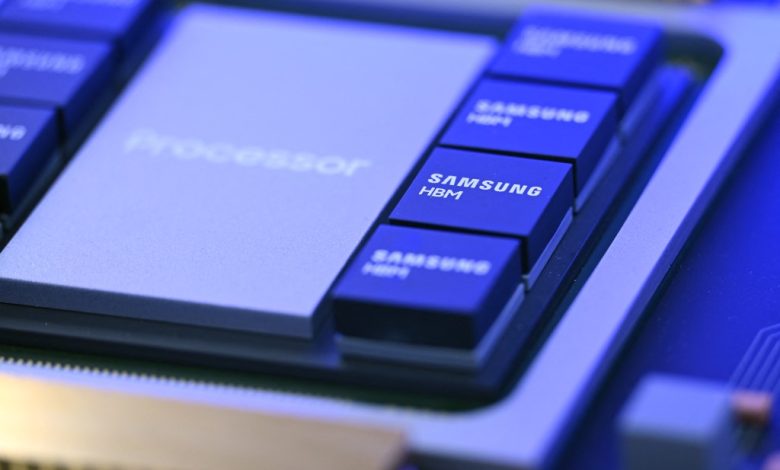
Samsung Electronics has announced that its planned supply of high-bandwidth memory (HBM) for 2027 is already completely sold out, highlighting the enormous demand coming from the global artificial intelligence industry. The announcement was made during the company’s third-quarter earnings conference call on October 29, 2026. Samsung executives confirmed that negotiations with customers had been completed at prices reflecting the competitiveness of its products, while major buyers continued requesting additional supplies. HBM is a specialised type of memory used alongside powerful processors to handle the enormous volumes of data required by artificial intelligence systems. Its importance has increased as technology companies invest heavily in data centres designed to train and operate increasingly advanced AI models.
The growing demand has also strengthened Samsung’s position in the HBM market, where it competes with major manufacturers including SK Hynix and Micron Technology. Samsung reported that revenue from its sixth-generation HBM4 products increased more than threefold during the third quarter compared with the previous quarter. HBM4 accounted for approximately 60 per cent of the company’s total HBM revenue, helping Samsung achieve its target of bringing its HBM market share closer to its overall DRAM market share. The company also reported positive early feedback from customers evaluating its next-generation HBM4E products, following the shipment of samples earlier in the year. These developments suggest that Samsung is making progress in strengthening its position in the increasingly competitive AI memory market.
Samsung’s announcement comes as demand for AI infrastructure continues to exceed the industry’s ability to expand semiconductor production. Major technology companies are investing billions of dollars in AI data centres, which require advanced processors and large quantities of high-performance memory. Samsung expects tight memory supply conditions to continue through 2028, explaining that building new semiconductor factories and installing specialised manufacturing equipment takes considerable time. Although the company plans to increase investment in its semiconductor operations, additional spending cannot immediately translate into higher production capacity. Construction delays, rising equipment costs and longer delivery times are among the factors limiting how quickly manufacturers can respond to growing demand.
To secure longer-term business relationships, Samsung has also expanded its supply agreements with major customers. The company disclosed that it had signed long-term memory supply contracts with 10 major customers and was negotiating with another 10. Its objective is to secure agreements covering between 60 and 70 per cent of its production capacity by 2030. These arrangements are expected to provide greater visibility into future demand and help Samsung plan its manufacturing investments. The company is also looking beyond traditional cloud and server customers, targeting businesses in the automotive, mobile and telecommunications industries. Meanwhile, Samsung plans to begin mass production of HBM4E in the first half of 2027, with production volumes expected to increase significantly during the second half of the year.
The development could have wider consequences for the global technology industry, particularly companies developing AI processors and operating large data centres. High-bandwidth memory is an essential component of modern AI accelerators, and limited availability could affect production schedules and increase costs for technology manufacturers. Samsung’s position is also important because it is one of the few companies capable of producing advanced memory at the scale required by major semiconductor customers. However, the current shortage presents both an opportunity and a challenge: strong demand can improve revenue for memory manufacturers, but higher component prices may increase costs for smartphone, computer and server producers. With Samsung’s 2027 HBM allocation already exhausted and the company expecting tight supply conditions through 2028, competition for advanced memory is likely to remain a major issue in the AI industry.




