
Tech CEOs Privately Question Anthropic CEO Over AI Safety Warnings
Anthropic CEO Dario Amodei was reportedly questioned by other technology leaders over his public warnings about AI risks during a recent White House meeting.

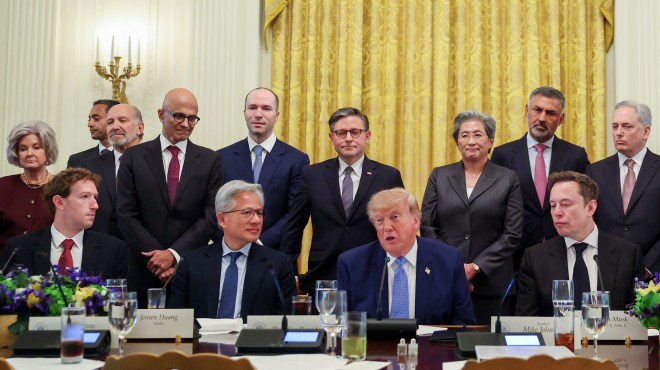
- Several major technology executives reportedly questioned Anthropic CEO Dario Amodei privately over his increasingly public warnings about the potential risks of advanced artificial intelligence. The discussion took place during a White House meeting involving senior technology leaders, including Nvidia CEO Jensen Huang and Meta CEO Mark Zuckerberg. The meeting focused on developing a common approach to AI safety and industry standards.
Amodei has repeatedly warned that rapidly advancing AI systems could create significant risks, including cyberattacks, job displacement and other unintended consequences. His position has differed from executives such as Huang, who has publicly argued that some predictions about catastrophic AI outcomes are unsupported and that excessive restrictions could slow technological development.
According to reporting on the meeting, Amodei defended his decision to speak publicly about potential AI dangers, arguing that transparency about risks is important as increasingly capable systems are developed. His comments have placed him at the centre of an ongoing debate within the technology industry over how quickly AI development should proceed and how much oversight should be required.
The White House meeting also resulted in a voluntary agreement involving major AI companies. The participating companies agreed to strengthen internal safeguards, work with independent auditors and conduct additional reviews of their AI systems. The agreement focuses on preventing systems from behaving outside their intended functions and reducing the risk of unauthorised access or hacking.
The disagreement among technology leaders reflects a broader debate over AI governance. Some executives have called for stronger external oversight because of the potential risks posed by increasingly capable systems, while others have supported industry-led safety measures and continued development. The recent White House agreement represents an attempt to establish common safety practices while leaving the companies responsible for much of the implementation.




