
ByteDance, Alibaba and Tencent Order More Than $35 Billion in Nvidia Chips
Three of China’s largest technology companies have reportedly ordered more than three million Nvidia RTX PRO 5500 graphics cards, highlighting surging demand for AI computing power despite US export restrictions and growing supply shortages.

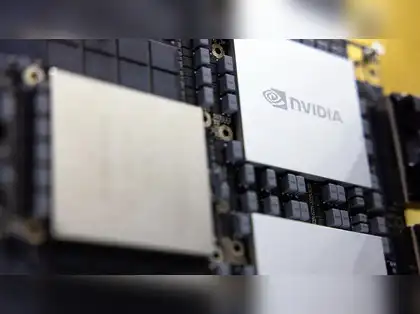
Chinese technology giants ByteDance, Alibaba and Tencent have reportedly placed orders for more than three million Nvidia RTX PRO 5500 graphics cards, with a combined potential value exceeding $35 billion. According to a Reuters report published on October 20, 2026, the companies are seeking additional computing capacity to support their artificial intelligence operations. The orders reflect the growing demand for processors capable of running AI models, chatbots and autonomous agents. However, Nvidia has reportedly warned customers and business partners that it cannot guarantee delivery of the requested quantities because demand from Chinese buyers significantly exceeds its planned production capacity. The development highlights the importance of semiconductor supplies in the global AI race, where access to powerful computing hardware has become a major competitive advantage.
The RTX PRO 5500 is a professional workstation graphics card rather than a processor specifically designed for large-scale AI data centres. Nevertheless, it is among the more powerful Nvidia products available to Chinese buyers under current US export restrictions. Washington has restricted the sale of certain advanced AI processors to China, including Nvidia’s Blackwell-based B300, while exports of the Hopper-based H200 are subject to licensing conditions. These restrictions have encouraged Chinese companies to seek alternative hardware that can legally be supplied while still providing sufficient performance for selected AI workloads. Although the RTX PRO 5500 is less powerful than Nvidia’s leading data-centre processors, it offers Chinese technology firms another option as they attempt to expand their computing infrastructure.
According to people familiar with the orders, the three companies are primarily interested in using the graphics cards for AI inference, the process through which trained models generate responses to user requests. Inference powers applications such as AI chatbots, coding assistants, recommendation systems and automated digital agents. Unlike training a large AI model from scratch, inference can often be distributed across different types of processors, depending on the model and workload. The RTX PRO 5500 may therefore help companies expand their AI services even if it cannot replace the most powerful processors used for demanding training operations. The cards reportedly carry a price of approximately $11,400 each, placing the potential value of the combined orders above $35 billion. However, the reported figures represent requested purchases rather than confirmed completed sales.
Supply shortages remain a major obstacle. Reuters reported that Nvidia may be able to fulfil only around 5% to 10% of the quantities requested by some customers. One source said the company had indicated it could manufacture no more than three million RTX PRO 5500 cards globally in 2027, while total orders from Chinese customers reportedly exceeded six million units. The supply challenge is partly connected to Nvidia’s production priorities, as the company is expected to devote substantial manufacturing capacity to its next-generation Rubin data-centre platform. Taiwan Semiconductor Manufacturing Company, which manufactures Nvidia’s advanced chips, plays a central role in this production chain. The reported shortage means Chinese buyers may face long waiting periods, reduced allocations or delays in expanding their AI infrastructure.
The orders also demonstrate how US-China technology competition is reshaping the semiconductor market. American restrictions are intended to limit China’s access to advanced computing capabilities, while Beijing is encouraging domestic companies to develop and adopt locally produced alternatives. Chinese chipmakers, including Huawei, have gained importance as technology companies seek to reduce their dependence on foreign hardware. However, the scale of the reported Nvidia orders suggests that demand for American graphics processors remains substantial. For Nvidia, the situation presents both an opportunity and a challenge: Chinese companies want access to its products, but political restrictions and limited manufacturing capacity could prevent the company from satisfying that demand. The outcome will depend on future export-policy decisions, production availability and China’s ability to expand its domestic semiconductor.




