
Apple’s A20 Pro Chip Sets New Performance Benchmark
Early Benchmark Results Suggest Apple’s New A20 Pro Delivers Major Performance Gains in the iPhone 18 Pro, Strengthening Its Position in Mobile Computing.

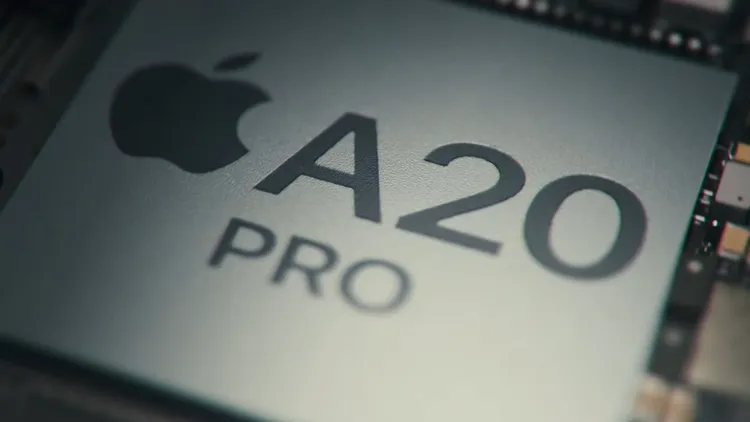
Apple’s new A20 Pro chip is showing impressive early performance results following the launch of the iPhone 18 Pro and iPhone 18 Pro Max. Initial Geekbench results indicate that the processor could deliver roughly 21% to 23% higher single-core performance and 27% to 28% higher multi-core performance than the A19 Pro, although the early figures have not yet been independently verified.
The benchmark results recorded an iPhone 18 Pro score of 4,719 in single-core testing and 12,677 in multi-core testing. The Pro Max produced similarly strong results, scoring 4,725 and 12,575 respectively. Both devices use a six-core A20 Pro CPU running at around 4.93GHz, according to the early Geekbench entries.
Graphics performance is also showing a substantial improvement. Early Geekbench Metal results suggest the seven-core GPU in the A20 Pro could be around 38% to 40% faster than the six-core GPU in the A19 Pro. Apple itself claims up to a 40% GPU performance improvement, alongside a CPU improvement of up to 20%.
The A20 Pro is manufactured using a 2-nanometer process and includes 50% more memory bandwidth than its predecessor. Apple has also redesigned the chip packaging and introduced a larger vapor-chamber cooling system, which the company says can provide up to 40% better sustained performance compared with the previous iPhone generation. The chip also includes integrated Neural Accelerators and a new dual 16-core Neural Engine for demanding on-device AI workloads.
Despite the impressive early numbers, benchmark results should be treated cautiously until more independent testing becomes available. Real-world performance can differ from synthetic scores, particularly during extended gaming, video processing and other demanding workloads. If the results hold up in wider testing, however, the A20 Pro could give Apple a significant performance advantage while providing the processing power needed for increasingly sophisticated on-device artificial intelligence.




