Vienna and Beijing Scientists Unveil World’s First Operational Nuclear Clocks
Independent research teams in Austria and China have developed the first operational nuclear clocks, a scientific breakthrough that could improve precision timekeeping, strengthen navigation systems and open new ways to investigate the fundamental laws of physics.

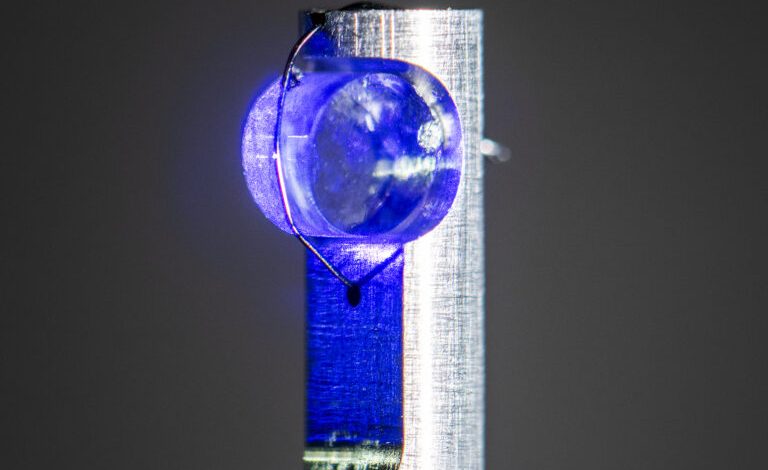
Scientists working independently in Vienna and Beijing have developed what researchers describe as the world’s first operational nuclear clocks, marking an important advance in the science of measuring time. The achievement, reported on October 7, 2026, represents a new approach to precision timekeeping that could eventually complement or surpass today’s most advanced atomic clocks. Both teams published their findings in the scientific journal Nature, demonstrating that nuclear transitions can be used to create functioning clocks. Although the new devices have not yet surpassed the accuracy of the best conventional atomic clocks, researchers believe they provide an important foundation for a new generation of timekeeping technology.
Traditional atomic clocks measure time by monitoring specific transitions in the energy states of electrons within atoms. Nuclear clocks, by contrast, rely on changes in an atom’s nucleus, which is the central region containing protons and neutrons. The research focuses on thorium-229, an unusual isotope whose nucleus can be excited using relatively accessible ultraviolet laser technology. Scientists embed thorium atoms in suitable solid crystals and use precisely controlled laser light to stimulate and measure the nuclear transition. Because the nucleus is generally less sensitive than the electron cloud to certain external disturbances, nuclear clocks could eventually offer advantages in stability and accuracy. However, achieving those advantages requires exceptionally precise control and further improvements in experimental techniques.
The two research groups reached the milestone using different experimental approaches. The Vienna team, involving researchers from the Vienna University of Technology and collaborating institutions, benefited from improvements in the quality of thorium-containing crystals. The Beijing team used a different approach that relied on powerful laser technology to investigate the nuclear transition. Their independent results demonstrated that the underlying technique can work in more than one laboratory setting, strengthening confidence in its scientific foundations. The experiments represent years of research into thorium-229, whose unusually low-energy nuclear transition has long attracted interest from physicists seeking an alternative to conventional atomic-clock technology.
The potential applications extend beyond simply keeping time. More precise clocks could improve navigation, synchronise telecommunications and financial networks, and support scientific instruments that depend on extremely accurate measurements. Nuclear clocks may also help researchers test fundamental physics theories by searching for tiny changes in physical constants over time. Such measurements could offer new ways to investigate dark matter and examine whether the laws of physics remain constant under different conditions. Nevertheless, these applications remain potential future benefits rather than immediate commercial capabilities. The current devices still require refinement, and researchers must demonstrate sustained improvements in accuracy, stability and practical operation before nuclear clocks can replace or outperform the most advanced systems currently available.
The breakthrough highlights how fundamental scientific research can eventually produce technologies with far-reaching consequences. Today’s optical atomic clocks already achieve extraordinary precision by measuring transitions in atoms, supporting applications ranging from satellite navigation to tests of relativity. Nuclear clocks could add another level of capability if scientists overcome the remaining technical challenges. Researchers in Vienna and Beijing have shown that the concept is experimentally viable, but further work will be needed to improve the laser systems, control environmental disturbances and compare performance against established clocks. If those efforts succeed, nuclear clocks could become valuable tools for metrology, communications, navigation and experimental physics. For now, the achievement represents a major step towards a new generation of precision instruments rather than the immediate replacement of existing atomic clocks.