Nvidia Shares Slide as $750B in AI Spending Faces Scrutiny
Investors are questioning whether the AI industry's unprecedented spending spree is sustainable, sending Nvidia shares lower despite the company's dominant position in the global artificial intelligence boom.

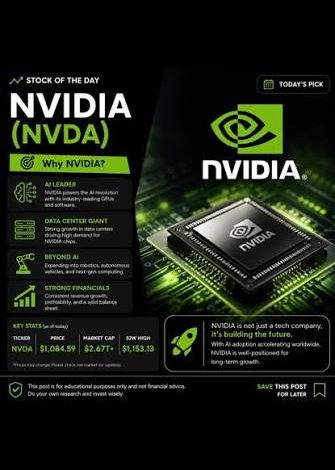
Nvidia, the world’s leading supplier of AI chips, has found itself at the centre of growing investor concerns after reports emerged that the company is involved in AI-related deals worth more than $750 billion. While the scale of these investments highlights Nvidia’s unmatched influence in the artificial intelligence industry, it has also raised serious questions about whether the pace of AI spending has become too aggressive.
The market reacted swiftly. Nvidia’s shares fell by around 4–5% as investors began reassessing the risks tied to the company’s expanding financial commitments. The decline was notable because Nvidia has been one of the strongest-performing technology stocks throughout the AI revolution, benefiting from soaring demand for its GPUs, which power everything from large language models to enterprise AI applications.
At the heart of investor anxiety is the growing complexity of AI financing. Nvidia is no longer simply selling chips to cloud providers and technology companies. It is increasingly participating in financing arrangements, partnerships, and guarantees designed to accelerate the construction of massive AI infrastructure projects.
Among the largest of these initiatives are discussions surrounding enormous AI data centres capable of delivering multiple gigawatts of computing power. Reports suggest Nvidia could help support financing for projects involving hundreds of billions of dollars in infrastructure and GPU purchases. While these arrangements could strengthen Nvidia’s long-term business by creating more demand for its hardware, they also expose the company to financial risks that traditional semiconductor manufacturers rarely face.
Analysts describe the situation as a form of “circular financing.” In this model, Nvidia helps customers secure funding to build AI infrastructure, which is then used to purchase Nvidia’s own products. Although this accelerates AI deployment, critics worry that it creates a cycle where demand is increasingly supported by financing rather than purely by organic business growth.
These concerns have become more pronounced as the entire AI industry dramatically increases capital expenditure. Major technology companies—including Alphabet, Microsoft, Amazon and Meta—are collectively committing hundreds of billions of dollars to expand data centres and AI computing capacity. Investors are beginning to ask whether future revenues will justify such extraordinary spending levels.
The timing of Nvidia’s share decline also reflects broader worries across Wall Street. Alphabet recently increased its AI spending forecasts, while other hyperscalers continue announcing larger infrastructure budgets. Although these investments are expected to support future AI growth, they also pressure company cash flows and raise questions about when shareholders will begin seeing meaningful returns.
Despite the concerns, Nvidia remains in an exceptionally strong financial position. The company continues to generate enormous operating cash flow and retains one of the healthiest balance sheets in the semiconductor industry. Supporters argue that Nvidia’s involvement in financing AI infrastructure is a strategic move designed to ensure customers can continue expanding their AI capabilities, ultimately increasing long-term demand for Nvidia’s chips.
Others believe the market may simply be adjusting to a new phase of the AI cycle. During the early stages of the AI boom, investors largely celebrated every new partnership, infrastructure announcement and capital investment. Now, however, attention is shifting from growth at any cost to questions about profitability, financial discipline and return on investment.
Adding another layer of uncertainty is increasing competition from China. New Chinese AI models have demonstrated that competitive performance can sometimes be achieved with fewer computing resources than previously believed. If AI developers become more efficient, the industry may eventually require less hardware than current spending projections assume. That possibility has prompted some analysts to question whether today’s enormous investments could eventually exceed actual market demand.
Still, few analysts dispute Nvidia’s central role in the AI ecosystem. The company supplies the processors that power most advanced AI models worldwide and continues to benefit from overwhelming demand for its latest GPU platforms. Even if spending growth moderates, Nvidia remains one of the biggest beneficiaries of global AI adoption.
For investors, however, the latest market reaction serves as a reminder that even the strongest AI companies are no longer judged solely by revenue growth. Increasing attention is now being paid to how AI expansion is financed, how sustainable those investments are, and whether the industry’s enormous capital commitments will ultimately generate returns that justify their unprecedented scale.
The debate surrounding Nvidia reflects a broader turning point for the artificial intelligence industry. AI is moving beyond the excitement of rapid innovation into a phase where financial discipline, infrastructure economics and long-term profitability are becoming just as important as technological breakthroughs. While Nvidia remains at the forefront of this transformation, its recent share decline shows that markets are becoming increasingly cautious about the costs of building the AI-powered future.