NASA Readies High-Altitude Jet for August Solar Eclipse
NASA is preparing its WB-57 research aircraft to fly high above the clouds during the August 12 total solar eclipse, giving scientists a rare opportunity to study the Sun’s outer atmosphere.

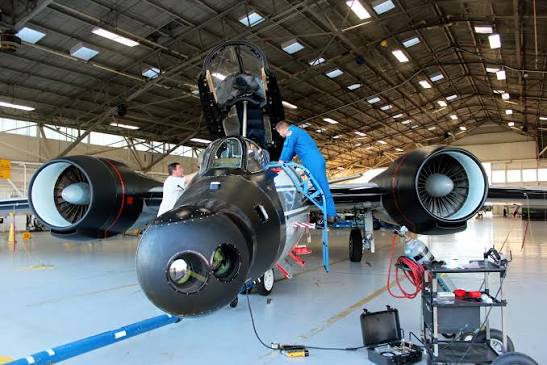
NASA is preparing one of its specialized high-altitude research aircraft for the upcoming total solar eclipse on August 12, 2026. The WB-57 jet will operate at roughly 50,000 feet, allowing researchers to observe the eclipse from above much of Earth’s atmosphere. NASA has previously used the aircraft for eclipse research, including during the 2024 total solar eclipse.
The aircraft’s altitude provides an important scientific advantage. From high above the clouds and much of the atmosphere, researchers can capture clearer observations of the Sun’s corona, the faint outer region that becomes visible during totality. Specialized instruments mounted on the aircraft will collect observations that can help scientists better understand the structure and behavior of the solar atmosphere.
The mission comes as the August eclipse prepares to cross parts of Greenland, Iceland and Spain. For scientists, an eclipse provides a rare natural laboratory because the Moon temporarily blocks the bright solar disk, making features around the Sun easier to observe. Researchers can use this brief period to investigate phenomena that are difficult to study under normal daytime conditions.
NASA’s use of high-altitude aircraft demonstrates how atmospheric research can complement observations from spacecraft and ground-based instruments. Flying the WB-57 into the eclipse path gives scientists the flexibility to position their instruments and collect measurements during the short period of totality. The data could contribute to a better understanding of solar activity and the environment surrounding Earth.
The August mission is another example of how major astronomical events can become opportunities for scientific discovery. While millions of people will watch the eclipse from the ground, NASA researchers will be looking at the event from a very different perspective—high above the surface, using specialized aircraft and instruments to study the Sun. The resulting observations could provide new insights into the solar corona and help scientists improve their understanding of our nearest star.