Oil Majors Pour Billions Into Nuclear Fusion
The world’s biggest oil companies are increasingly investing in nuclear-fusion startups, betting that the technology could eventually provide a massive source of reliable, low-carbon electricity for AI data centers and the wider economy.

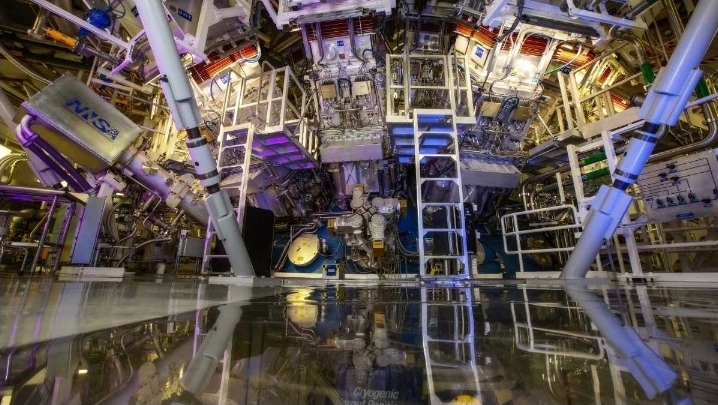
Major oil and gas companies are expanding their investments beyond traditional hydrocarbons and into nuclear fusion, a technology that could potentially provide large quantities of electricity without the carbon emissions associated with fossil-fuel power generation. The shift reflects a broader strategy among energy companies to position themselves for an electricity-hungry future while retaining expertise in large-scale energy infrastructure.
The timing is particularly significant because the rapid expansion of artificial intelligence and data centers is creating enormous demand for reliable electricity. Hyperscalers are planning hundreds of billions of dollars in data-center investment, making dependable power increasingly valuable. Energy companies see potential opportunities in supplying and managing that power infrastructure, including technologies such as fusion.
Fusion is attractive because it attempts to reproduce the process that powers the Sun: combining light atomic nuclei under extremely high temperatures and pressures to release energy. Unlike conventional nuclear fission, fusion does not rely on splitting heavy atoms, and successful commercial fusion could provide continuous electricity with substantially different waste and fuel characteristics. The challenge is that achieving commercially viable fusion remains extremely difficult, with scientists and companies still working to maintain stable reactions and produce electricity economically.
For oil majors, the investment also represents a potential extension of skills they already possess. Large energy projects require expertise in engineering, complex industrial equipment, project management and operating infrastructure at enormous scale. Companies such as SLB are already moving into adjacent technologies, including geothermal energy, carbon capture, lithium extraction and data-center infrastructure, demonstrating how traditional energy expertise is increasingly being applied beyond oil production.
The fusion bet remains highly speculative. Commercial fusion power plants have not yet reached widespread deployment, and major technical and economic hurdles remain. Nevertheless, increasing investment from established energy companies signals that the industry sees potential value in becoming part of the next generation of power infrastructure. If fusion eventually becomes commercially practical, today’s investments could give oil majors a role in an energy market that looks very different from the one they dominate today.