
Amazon Opens Trainium AI Chips to Developers With New TorchNeuron Software
Amazon is challenging Nvidia’s dominance in artificial intelligence computing with TorchNeuron, an open-source tool that allows developers to run existing PyTorch AI code on Amazon’s Trainium chips with minimal changes.

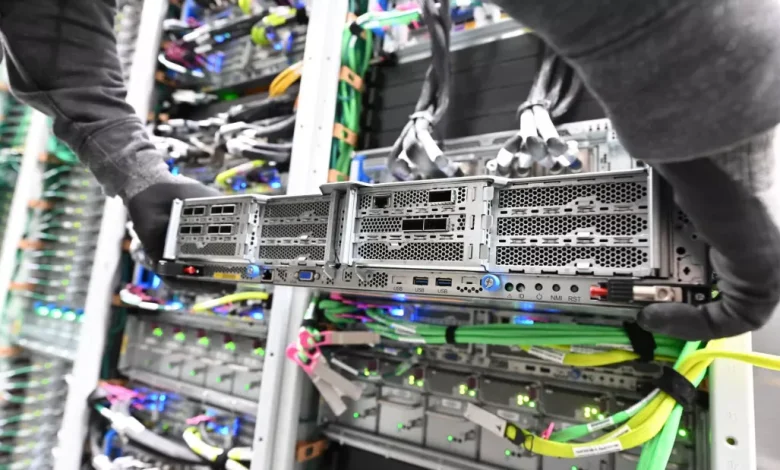
Amazon has introduced TorchNeuron, a new software tool designed to make its custom artificial intelligence chips more accessible to developers and AI businesses. Announced on October 19, 2026, the technology allows developers to run applications built using PyTorch, one of the world’s most widely used AI development frameworks, on Amazon Web Services’ Trainium processors. According to Amazon, developers can move compatible projects to Trainium by changing a configuration setting rather than rewriting their entire codebase. The software is scheduled for public beta release on October 20 through the PyTorch ecosystem. By reducing the technical barriers to adopting its chips, Amazon hopes to attract developers who have traditionally relied on Nvidia hardware to train and operate their AI models.
The launch addresses one of Nvidia’s strongest competitive advantages: its CUDA software ecosystem. Nvidia has spent years developing software, libraries and tools that allow AI developers to use its graphics processing units efficiently. Many AI applications are built using PyTorch, and the close integration between PyTorch and Nvidia’s CUDA platform has made Nvidia hardware a popular choice for researchers and companies. Amazon’s TorchNeuron aims to reduce that dependency by allowing developers to use familiar PyTorch programming interfaces on Trainium. The tool supports eager execution for research and debugging, the torch.compile system for performance optimisation, and specialised kernel development. Amazon says TorchNeuron supports both Trainium2 and Trainium3, helping developers move from experimentation towards production deployments.
Amazon says the software could also reduce the cost of training and running AI models. Its Trainium chips are designed specifically for AI workloads in the AWS cloud, where they can be combined with storage, networking and other computing services. The company argues that customers can benefit from using one integrated platform for model training and inference rather than relying entirely on more expensive computing options. More than 30 early customers reportedly tested the new software across areas including robotics, voice AI and world-model development. Amazon also highlighted Deepgram, an AI voice technology company, which reportedly processes 70% more audio per dollar using Trainium while maintaining production-level accuracy. These are company-reported results, and actual savings will depend on the model, workload and infrastructure used.
TorchNeuron is also part of Amazon’s broader strategy to expand its custom semiconductor business. The company has invested heavily in designing its own chips through Annapurna Labs, the semiconductor division responsible for developing Trainium and other Amazon processors. By offering an alternative to Nvidia hardware, Amazon can potentially reduce its own dependence on external chip suppliers while providing AWS customers with additional computing options. The move comes as technology companies spend heavily on AI infrastructure to support increasingly demanding models and autonomous agents. Google has also been developing software to make its own AI chips easier to use, demonstrating that competition in the sector is no longer limited to chip performance alone. Software compatibility, developer familiarity and the total cost of operating AI systems are becoming equally important factors.
Amazon says TorchNeuron will be released under the Apache 2.0 open-source licence, allowing developers to inspect, use and modify the software under its licence terms. The company is also working with the PyTorch community to improve hardware flexibility and reduce the amount of framework code tied to particular chip architectures. Developers will be able to use familiar debugging and profiling tools, while more advanced users can write specialised kernels to optimise performance. Nevertheless, compatibility does not guarantee that every AI model will run equally well on every processor. Developers may still need to test workloads, tune performance and account for differences in hardware capabilities before moving production systems. The public beta will give the wider development community an opportunity to assess how well TorchNeuron performs outside Amazon’s early testing programme.
The launch represents another step in the growing competition between Amazon and Nvidia for the infrastructure powering the global AI industry. Nvidia continues to benefit from its established CUDA ecosystem, while Amazon is attempting to make Trainium a practical alternative by simplifying the software migration process. If TorchNeuron delivers reliable performance and meaningful cost savings, it could encourage more startups and large organisations to evaluate Amazon’s chips for AI training and inference. However, Nvidia’s established developer community and extensive hardware ecosystem remain significant advantages. Ultimately, the success of TorchNeuron will depend on whether developers find it easy to adopt, whether their applications perform efficiently and whether the resulting savings justify switching infrastructure. Amazon’s strategy is clear: make its chips easier to use and compete not only on hardware, but also on the software experience surrounding it.




