
DeepSeek Helps Huawei Design Next-Generation AI Chips to Challenge Nvidia
China’s DeepSeek is reportedly working directly with Huawei engineers to influence the design of future AI processors, strengthening efforts to reduce reliance on Nvidia and build a more independent domestic artificial intelligence ecosystem.

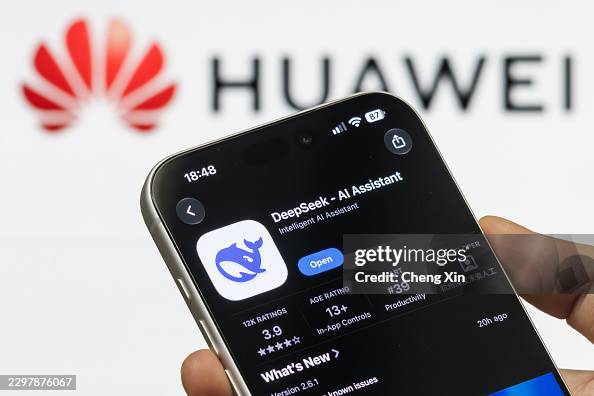
Chinese artificial intelligence company DeepSeek is reportedly working closely with Huawei Technologies to shape the design of next-generation AI chips expected to arrive from 2027 onwards. According to a report published by The Information on October 19, 2026, Huawei engineers have been working with DeepSeek to incorporate the AI startup’s technical requirements into future chip designs. Two people familiar with the collaboration reportedly said the discussions go beyond ordinary conversations between a chip supplier and its customer. DeepSeek is providing input on how AI models perform calculations and move data between processors, areas that can significantly affect the speed and efficiency of large-scale AI systems. If the reported collaboration continues successfully, it could help Huawei produce processors better suited to the demanding workloads required to train and operate advanced AI models.
The partnership comes as China intensifies efforts to reduce its dependence on Nvidia, whose graphics processing units have become essential infrastructure for the global AI industry. US export restrictions have limited Chinese companies’ access to some advanced American chips, encouraging domestic technology firms to develop alternative hardware and software. Huawei has responded by expanding its Ascend processor family and building systems designed to support large AI workloads. DeepSeek, meanwhile, has gained international recognition for developing competitive AI models and improving computational efficiency. By working together, the companies could combine DeepSeek’s knowledge of model architecture with Huawei’s semiconductor and computing expertise, potentially creating processors that better match the needs of Chinese AI developers.
One important aspect of the reported collaboration is the optimisation of communication between processors. Training advanced AI models involves distributing enormous computational workloads across multiple chips, requiring them to exchange data rapidly and efficiently. Poor communication between processors can create bottlenecks, reducing the performance of an otherwise powerful computing system. DeepSeek’s feedback could help Huawei make design decisions that improve how its processors handle these operations. The companies have already demonstrated closer technical cooperation through software development. In September 2026, DeepSeek announced open-source programming infrastructure optimised for Huawei’s Ascend chips, including computing and communication libraries. The two companies also worked on a computing solution based on 128 Ascend 950 processors, demonstrating their shared interest in improving the hardware and software needed for large-scale AI workloads.
Huawei’s future chip roadmap provides additional context for the partnership. The company has identified the Ascend 960DT as a next-generation processor planned for the first quarter of 2027, followed by the Ascend 970 in 2028. According to reporting on Huawei’s roadmap, the company intends to continue improving computing performance and the capabilities of its AI infrastructure. DeepSeek’s involvement could help Huawei prioritise features that are particularly important for training and running large language models. However, the precise extent of DeepSeek’s influence on individual chip designs has not been publicly detailed by both companies, and the reported cooperation should not be interpreted as proof that Huawei has already matched Nvidia’s performance across all workloads. Hardware capabilities, manufacturing capacity, memory availability and software compatibility will remain important factors in determining how competitive the resulting systems become.
The development could have wider implications for the global AI semiconductor market. Nvidia benefits not only from its processors but also from CUDA, its established software platform, which developers use to build and optimise AI applications. Chinese companies are increasingly attempting to create alternatives that combine domestic processors, specialised software and integrated computing systems. DeepSeek’s work with Huawei could contribute to that effort by ensuring that future chips are designed around the requirements of advanced AI models from an early stage. Nevertheless, challenging Nvidia will require more than producing powerful processors: developers must also be able to train models efficiently, deploy applications reliably and access sufficient quantities of hardware. For now, the reported partnership represents a significant step in China’s push for technological independence, with its long-term impact depending on whether Huawei can translate DeepSeek’s technical input into commercially competitive AI infrastructure.




