Apple Captures Record 49% of Global Smartphone Revenue Despite Shipping Less Than a Quarter of Devices
Premium iPhone demand, rising average selling prices, and strong customer loyalty help Apple generate nearly half of all global smartphone revenue, reinforcing its dominance in the high-end mobile market.

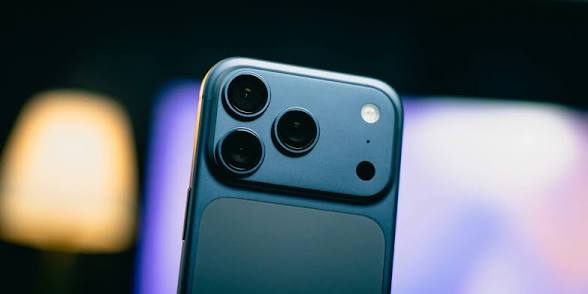
Apple has reached another major milestone in the global smartphone industry, capturing a record 49% of worldwide smartphone revenue during the second quarter of 2026. The achievement highlights the company’s remarkable ability to generate industry-leading profits despite shipping far fewer smartphones than the broader Android ecosystem. According to the latest market research, Apple’s revenue share reached its highest-ever level for a June quarter, underscoring the continued strength of the iPhone franchise even as the global smartphone market faced slowing shipment volumes.
The figures illustrate a striking contrast between market share and financial performance. While Apple accounted for approximately 23% of global smartphone shipments, it generated almost half of all smartphone revenue worldwide. This reflects Apple’s long-standing premium business strategy, which focuses on selling higher-value devices with stronger profit margins rather than competing purely on shipment volume.
A major driver behind Apple’s performance has been the continued popularity of the iPhone 17 lineup. Consumers have shown strong demand for premium models equipped with faster processors, advanced camera systems, improved battery life, and deeper AI-powered software features. Combined with stable pricing across much of the lineup, these factors helped Apple increase both sales and its average selling price, allowing the company to outperform many competitors despite broader market challenges.
According to Counterpoint Research, Apple’s smartphone revenue increased by 22% year over year, making it the fastest-growing company among the world’s five largest smartphone manufacturers. At the same time, the company’s average selling price climbed to approximately $946, demonstrating that customers continue to choose higher-end iPhone models even during a period of economic uncertainty. Rather than competing through aggressive discounts, Apple has maintained its focus on premium products and long-term brand value.
One of Apple’s greatest competitive advantages remains its highly integrated ecosystem. Millions of users rely on seamless connections between iPhone, Mac, iPad, Apple Watch, AirPods, iCloud, and a wide range of subscription services. This interconnected experience makes it easier for existing customers to remain within Apple’s ecosystem when upgrading devices, contributing to exceptionally high customer loyalty and repeat purchases.
Services also continue to strengthen Apple’s overall business. Revenue from the App Store, Apple Music, iCloud, Apple TV+, AppleCare, and other digital offerings provides a steady stream of recurring income that complements hardware sales. As more users join the Apple ecosystem, these services become increasingly valuable, helping offset fluctuations in hardware demand while reinforcing long-term customer retention.
The broader smartphone market presents a very different picture. Global smartphone shipments declined during the quarter as consumers held onto their devices for longer and manufacturers faced softer demand in several regions. However, average selling prices across the industry continued to rise due to increased demand for premium smartphones and higher component costs. Apple benefited more than most competitors from this shift toward higher-value devices, allowing it to expand its revenue share despite overall shipment weakness.
Artificial intelligence is becoming another important factor in Apple’s strategy. While many competitors have aggressively promoted generative AI features, Apple has taken a more measured approach by integrating AI capabilities directly into its operating systems and applications. Features such as on-device intelligence, improved Siri functionality, intelligent photo editing, writing assistance, and privacy-focused AI processing are expected to play an increasingly important role in future iPhone upgrades.
Behind the scenes, Apple continues investing heavily in custom silicon. The company’s A-series processors remain among the most powerful smartphone chips in the industry, delivering exceptional performance while maintaining impressive energy efficiency. This combination enables increasingly sophisticated AI features to run directly on the device, reducing reliance on cloud computing while improving speed, privacy, and battery life.
Apple’s success also demonstrates the strength of the premium smartphone segment. While Android manufacturers collectively ship far more devices worldwide, Apple’s concentration on flagship products allows it to capture a disproportionate share of industry revenue and profits. This strategy has enabled the company to remain one of the world’s most valuable businesses despite intense competition from Samsung, Xiaomi, Oppo, Vivo, Huawei, and other global smartphone brands.
Investors continue to watch Apple’s performance closely because the iPhone remains the company’s largest source of revenue. Strong smartphone sales often support growth across Apple’s wider ecosystem, including accessories, wearables, software subscriptions, and enterprise services. At the same time, supply chain challenges and rising component costs remain key risks, particularly as demand for AI hardware increases competition for advanced semiconductor manufacturing and high-bandwidth memory.
Industry analysts believe Apple’s latest milestone reflects more than just a successful product cycle. It highlights the effectiveness of a business model built on premium hardware, tightly integrated software, long-term customer loyalty, and recurring service revenue. Rather than competing solely on volume, Apple has consistently demonstrated that delivering high-value products to a loyal customer base can produce exceptional financial results.
As the smartphone industry enters a new era shaped by artificial intelligence, custom silicon, and advanced mobile computing, Apple’s ability to capture nearly half of global smartphone revenue reinforces its position as the benchmark for premium consumer technology. Although competition is expected to intensify, the company’s record-breaking performance shows that its strategy of combining innovation, ecosystem integration, and premium experiences continues to resonate with consumers around the world.