Apple Reportedly Develops HomeView With a Robotic Arm and 360-Degree Screen
Apple is reportedly developing a premium version of its new HomeView smart-home device featuring a larger 9-inch display and a motorised robotic arm that can automatically turn towards the person speaking.

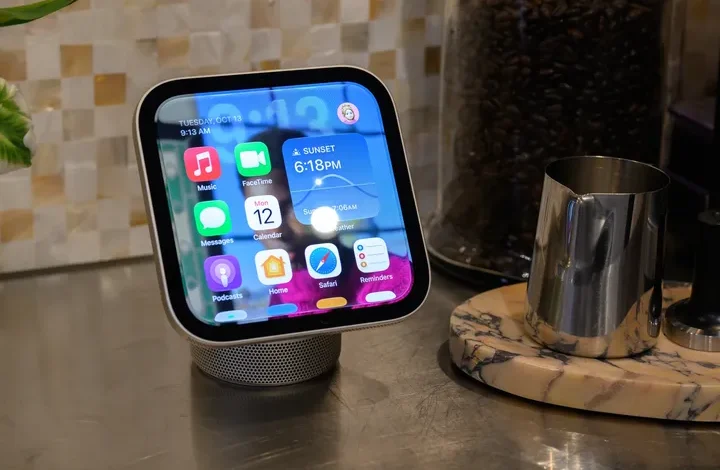
Apple is reportedly working on an advanced version of its HomeView smart-home device that could introduce robotic movement to the company’s growing range of home technology products. According to a report by Bloomberg’s Mark Gurman published on October 18, 2026, the proposed device would feature a screen mounted on a motorised robotic arm capable of rotating through 360 degrees. The system would use voice recognition to identify who is speaking and turn the display towards that person. The device is reportedly being developed as a premium addition to Apple’s smart-home product lineup rather than a replacement for the recently announced HomeView. Apple has not officially confirmed the product, its specifications or its expected launch date.
The reported device would feature a display measuring approximately nine inches, making it larger than the seven-inch screen on the first-generation HomeView announced on October 13. The robotic arm would allow the screen to turn towards different people in a room without requiring them to move the device manually. This could be particularly useful in shared spaces such as kitchens and living rooms, where family members may interact with the assistant from different positions. During video calls, the moving display could also make conversations more convenient by automatically orienting itself towards the person speaking. The concept combines smart-home controls, voice interaction and robotic movement in a single device designed to provide a more responsive experience.
Apple’s first HomeView is designed to bring entertainment, communication and smart-home management together through its updated Siri AI assistant. The device can display personal information, support FaceTime calls, control compatible smart-home accessories and recognise household members through facial recognition. Apple says its approach places privacy and security at the centre of the product, with sensitive personal information processed through protected systems connected to the user’s iPhone. The proposed robotic version would build on this foundation by adding physical movement to the interaction. Instead of relying entirely on a fixed display, the device could respond to the position and identity of a speaker, making it more adaptable to different activities and users within the home.
The development also reflects Apple’s broader interest in robotics and more interactive computing devices. Reports indicate that the company has explored tabletop robotic systems for several years, including concepts that combine a screen with a motorised arm. Such technology could help Apple create products that feel more responsive to human movement while extending the role of its AI assistant beyond phones, tablets and computers. However, important technical questions remain, including how accurately the device would identify speakers, how quickly it could reposition its display and how the motorised mechanism would operate safely around children and household objects. Apple has not released official technical details about the reported robotic HomeView, so these capabilities remain based on reporting rather than a confirmed product specification.
The premium device could arrive in 2027 or 2028, according to the reports, although Apple has not confirmed a release window or price. Bloomberg’s reporting suggests that the company intends to position it above the standard HomeView, which starts at $299 in the United States and is scheduled to begin shipping on November 13, 2026. The robotic version would likely cost more because of its larger screen and mechanical components, but its final price remains unknown. If developed successfully, the device could strengthen Apple’s position in the smart-home market, where it competes with products from Google and Amazon. For now, the project remains unannounced, and its design, features and launch schedule could change before any public release.