
BYD Plans to Expand European Workforce to More Than 40,000 by 2030
Chinese electric vehicle manufacturer BYD plans a major European recruitment drive, aiming to employ more than 40,000 people by 2030 as it expands local production and strengthens its position in the region’s automotive market.

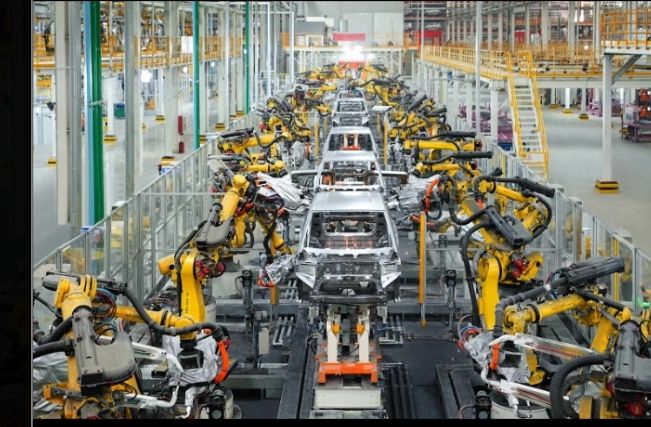
Chinese electric vehicle giant BYD has announced plans to increase its European workforce to more than 40,000 employees by 2030 as it shifts from relying primarily on vehicle exports to establishing a stronger manufacturing presence across the continent. The announcement was made by executive vice-president Stella Li during interviews at the Paris Motor Show on October 12, 2026. Li said the company expects its European workforce to exceed 10,000 employees in the near future before expanding substantially over the next four years. The recruitment programme reflects BYD’s long-term ambitions in Europe, where competition among electric vehicle manufacturers is intensifying and Chinese automotive brands are expanding their presence.
The planned expansion could make BYD one of the largest non-European automotive employers in the region. According to reports, the company intends to recruit workers from the automotive industry and other sectors, including professionals affected by job cuts at European manufacturers. The recruitment drive could create opportunities in vehicle assembly, engineering, logistics, sales, maintenance and other supporting operations. However, the company has not yet provided a complete breakdown of the jobs it expects to create in each country. Its ability to meet the target will depend on the pace of factory development, vehicle demand, supply-chain requirements and the availability of appropriately skilled workers.
A central part of BYD’s strategy is the development of its first European passenger-car factory in Szeged, Hungary. The company said preparations for the facility were approaching completion, with mass production targeted for the fourth quarter of 2026. Local manufacturing would allow BYD to build vehicles closer to European customers, potentially reduce transportation costs and lessen its dependence on imports from China. The company is also considering additional production facilities elsewhere in Europe, with France and Spain identified as possible locations. If these plans progress, BYD could establish a broader regional manufacturing network capable of supporting its recruitment target and increasing the proportion of vehicles produced within the European market.
BYD’s expansion comes as Chinese vehicle manufacturers face growing trade pressure in Europe. The European Union has imposed additional tariffs on Chinese-made battery-electric vehicles, while China and the EU recently reached a broader agreement aimed at managing the rapid growth of Chinese hybrid-car imports. The precise implications of the latest agreement remain under assessment, according to Li. Expanding local manufacturing could help BYD respond to changing trade rules by producing more vehicles within Europe rather than depending exclusively on shipments from China. However, building factories and recruiting thousands of employees requires substantial investment, and local production alone does not guarantee that the company will avoid every trade restriction or regulatory challenge.
The announcement highlights a wider transformation in Europe’s automotive industry as Chinese manufacturers compete more directly with established brands. BYD’s proposed workforce expansion could support local employment and strengthen its long-term operations, but it may also intensify competition for customers, investment and market share. European automakers are already facing pressure to improve production efficiency, develop affordable electric vehicles and respond to changing consumer demand. For BYD, the next stage will involve turning its recruitment ambitions into operational results through factory launches, supply-chain development and sustained vehicle sales. The company’s target of more than 40,000 European employees by 2030 is ambitious, and its progress will depend on market conditions, regulatory developments and the successful execution of its manufacturing plans.




