China Wastes Enough Clean Energy to Cover All New Power Demand
China discarded an estimated 360 terawatt-hours of wind and solar electricity in the first half of 2026 as grid constraints and continued coal-power growth prevented the country from fully using its rapidly expanding renewable capacity.

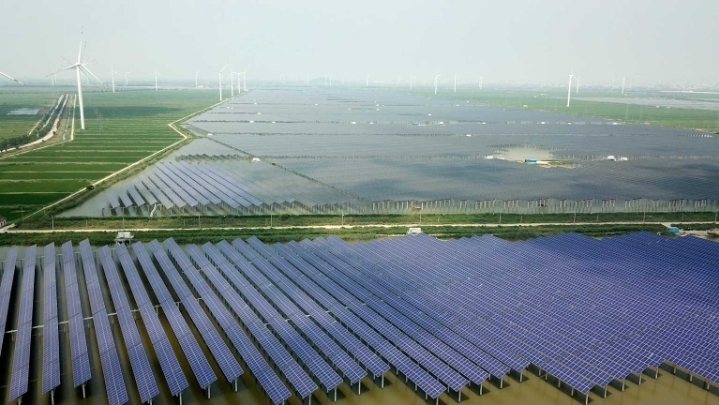
China’s renewable-energy expansion has reached a point where the country is producing more wind and solar electricity than parts of its power system can effectively absorb. An estimated 360 terawatt-hours (TWh) of clean electricity was curtailed between January and June 2026, according to analysis from Global Energy Monitor and the Centre for Research on Energy and Clean Air. That figure represents a 49% increase from the same period last year and was enough electricity to cover Mexico’s annual power consumption.
The scale of the problem is particularly striking because the wasted renewable electricity exceeded China’s entire increase in electricity demand during the first half of the year. Power demand grew by approximately 258 TWh, meaning that, if the available wind and solar electricity had been fully integrated into the grid, it could theoretically have covered all of that additional demand and reduced the need for additional coal generation.
At the same time, China’s coal-power generation increased by 3.4% year over year during the first half of 2026. The country commissioned about 30 gigawatts of new coal capacity, while only 2.7 GW was retired. Researchers say the continued expansion of coal capacity has contributed to an oversupplied electricity system, while long-term contracts and limitations in power dispatch make it harder for renewable electricity to displace coal generation when wind and solar output is high.
The problem is also geographical. Much of China’s renewable generation is concentrated in northern and western regions such as Inner Mongolia, Xinjiang and Qinghai, while major electricity-demand centres are located farther east. Transmission infrastructure and electricity-market arrangements have not expanded quickly enough to move all of the available renewable power to where it is needed. Estimated curtailment in some major renewable-producing regions has reached 15% to 30%, compared with less than 3% in some high-demand provinces.
The situation highlights a major challenge for China’s clean-energy ambitions: building renewable capacity is only part of the transition. The country also needs stronger transmission networks, more flexible grid management, energy storage and electricity-market reforms capable of moving renewable power across regions. Without those improvements, China could continue adding enormous amounts of solar and wind capacity while simultaneously relying on coal to keep its electricity system stable.