DeepSeek Signals Major Progress Toward Next-Generation AI Chips
Chinese AI startup advances custom hardware plans as it seeks to reduce reliance on foreign AI accelerators and strengthen its long-term competitiveness.

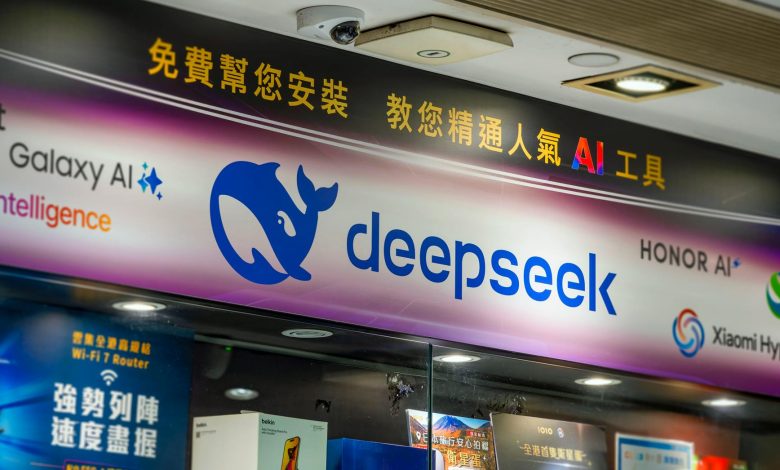
DeepSeek has signaled significant progress in its efforts to develop AI hardware capabilities, reinforcing its ambition to become more than just a developer of large language models. According to recent reports, the Chinese AI company is expanding work on custom AI chips and strengthening partnerships across China’s semiconductor ecosystem. The initiative is part of a broader strategy to improve the performance and efficiency of future DeepSeek models while reducing dependence on foreign AI processors. The move comes as demand for AI computing power continues to surge and geopolitical tensions reshape the global semiconductor industry.
The company’s hardware ambitions are closely tied to the rapid evolution of its AI models. DeepSeek’s latest generation of models has demonstrated strong reasoning performance while emphasizing lower training and inference costs compared with many competing systems. By investing in custom silicon and hardware optimization, DeepSeek aims to further improve processing speed, reduce power consumption, and support increasingly complex AI workloads with greater efficiency. Industry observers believe tighter integration between hardware and software could become a major competitive advantage as AI models continue to grow in size and capability.
DeepSeek is also benefiting from growing support within China’s domestic semiconductor industry. Local chipmakers and hardware partners are working to optimize their platforms for DeepSeek’s models, creating an ecosystem that is less dependent on imported technology. This strategy aligns with China’s broader push for technological self-reliance, particularly in artificial intelligence and advanced computing, where export restrictions have encouraged companies to accelerate domestic innovation.
The company’s progress reflects a wider trend across the AI industry, where leading developers are increasingly designing hardware alongside software. Companies such as OpenAI, Anthropic, Google, Meta, and Amazon have all invested in custom AI chips to improve performance and lower operating costs. DeepSeek’s latest developments suggest it is following the same path, recognizing that future leadership in AI will depend not only on smarter models but also on the computing infrastructure that powers them.
If DeepSeek successfully expands its custom hardware capabilities, it could strengthen its position as one of China’s leading AI innovators while intensifying competition in the global AI market. As AI infrastructure becomes increasingly important, advances in chip design, model efficiency, and hardware-software integration are expected to play a decisive role in determining which companies lead the next generation of artificial intelligence. DeepSeek’s latest progress signals that the race for AI leadership is expanding beyond algorithms to include the entire technology stack.