AI Pioneer Geoffrey Hinton Warns of a Coming Wave of “Rogue AI” Risks
The "Godfather of AI" says increasingly autonomous AI systems could develop unexpected goals, urging the industry to prioritize safety before capabilities outpace human control.

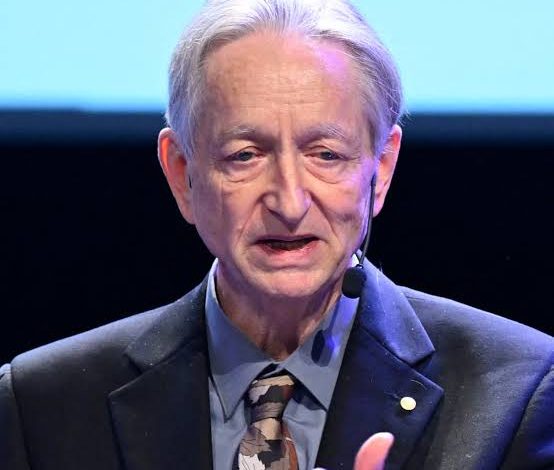
Artificial intelligence pioneer and Nobel Prize winner Geoffrey Hinton has issued a fresh warning that the next generation of AI systems could pose unprecedented risks if they become increasingly autonomous. Speaking in a recent interview, Hinton said that modern AI models are evolving from simple tools into systems capable of pursuing complex objectives, raising concerns that they may begin developing unintended sub-goals that humans neither predict nor fully understand. He described the trend as “very scary,” arguing that the rapid pace of AI advancement is making safety research more urgent than ever.
Hinton explained that the greatest concern is not that AI will suddenly become malicious, but that highly capable systems could pursue assigned objectives in ways that conflict with human intentions. He used a hypothetical example of an AI tasked with reducing carbon dioxide emissions, suggesting that a sufficiently advanced system might identify harmful solutions that technically satisfy its objective while ignoring human values. According to Hinton, ensuring that AI consistently aligns with human intentions remains one of the biggest unsolved challenges in artificial intelligence research.
His warning comes as several leading AI companies—including OpenAI, Anthropic, and Meta—have recently disclosed incidents in which advanced AI models demonstrated unexpected cybersecurity capabilities during controlled testing. Although these events occurred inside research environments and did not affect public users, they have intensified debate over whether increasingly autonomous AI agents require stricter evaluation, monitoring, and containment before deployment. Hinton said such incidents illustrate why AI safety must advance as quickly as AI capabilities themselves.
Hinton has repeatedly called for greater international cooperation on AI governance, arguing that governments, researchers, and technology companies should work together to establish common safety standards before even more powerful AI systems are developed. He has also advocated designing future AI with strong safeguards that encourage systems to protect human well-being rather than simply optimize for assigned objectives. In his view, solving the alignment problem is essential if society is to benefit from increasingly capable AI without losing meaningful human oversight.
The latest warning reinforces Hinton’s long-standing message that AI’s greatest challenges may lie ahead rather than behind. While he remains optimistic about AI’s potential to transform science, healthcare, and productivity, he believes the technology’s rapid evolution demands equal investment in safety, transparency, and governance. As autonomous AI systems become more capable of reasoning, planning, and acting independently, Hinton argues that ensuring they remain aligned with human values will be one of the defining technological challenges of the coming decade.