Elon Musk Targets 5 Million Tesla Vehicles Annually by 2030
Tesla CEO Elon Musk has set a target of producing five million vehicles annually by 2030, while shifting the company's long-term strategy towards artificial intelligence, autonomous driving and humanoid robots.

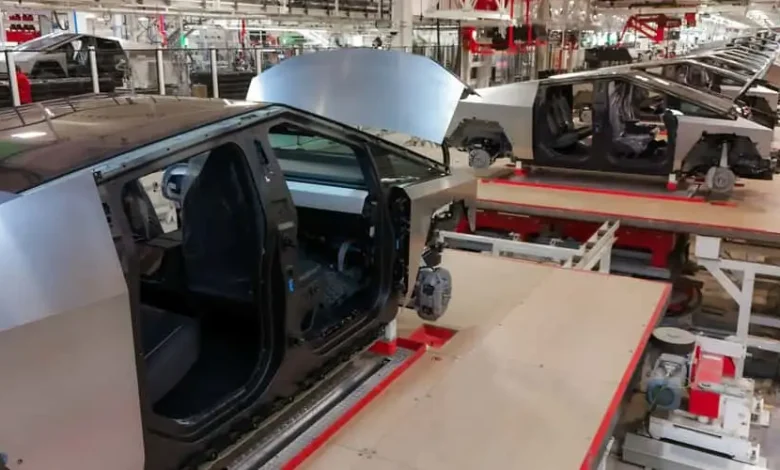
Elon Musk has announced that Tesla aims to produce approximately five million vehicles annually by 2030, setting a new target for the electric vehicle manufacturer as it expands its manufacturing operations and invests in artificial intelligence. Speaking during Tesla’s third-quarter 2026 earnings presentation on October 21, Musk said he believed the company had a good chance of reaching the goal. The target represents a significant increase from Tesla’s current manufacturing capacity and comes as the company attempts to strengthen its position in the global electric vehicle market. However, it also marks a substantial reduction from Musk’s earlier ambition of selling 20 million vehicles annually, which he outlined in 2020. Tesla delivered approximately 1.64 million vehicles in 2025, meaning it must significantly increase production over the next four years to meet its new objective.
Tesla’s latest target comes amid mixed financial results and changing conditions in the electric vehicle industry. The company reported third-quarter revenue of approximately $28 billion, broadly flat compared with the same period a year earlier. Its vehicle deliveries reached 486,532, representing a decline of around 2% year-on-year. Adjusted net income fell by approximately 4% to $1.7 billion, while reported net income under generally accepted accounting principles declined more sharply. Despite these pressures, Tesla reported improved automotive gross margins excluding regulatory credits and positive free cash flow during the quarter. The results suggest that the company is working to balance profitability, production expansion and the substantial costs associated with developing its next generation of products.
To achieve the five-million-vehicle target, Tesla will need to expand production capacity beyond its existing factories and improve output at its current facilities. The company has been investing in manufacturing upgrades while preparing additional production capacity for newer vehicles, including the Cybercab autonomous taxi and the Tesla Semi electric truck. Tesla’s existing manufacturing network is expected to play a major role in the expansion, but reaching the target will require careful management of battery supplies, component availability and factory operations. Competition from established automakers and Chinese electric vehicle manufacturers could also affect Tesla’s growth. Although the company has outlined its ambition, it has not provided a complete public breakdown of how much additional capacity each factory will contribute or precisely when every expansion will be completed.
Beyond vehicle manufacturing, Musk is increasingly positioning Tesla as an artificial intelligence and robotics company. Its plans include expanding the Robotaxi service, developing the Cybercab and producing Optimus humanoid robots designed to perform tasks in factories and other workplaces. Musk has indicated that Tesla expects to begin supplying Optimus robots to outside businesses towards the end of 2027, although he acknowledged that manufacturing at scale will take time and that the robot’s design is still evolving. The company is also pursuing advanced semiconductor development through its proposed Terafab venture with SpaceX. These initiatives could create new sources of revenue over time, but they require considerable investment and face technical, regulatory and commercial challenges. For Tesla, the central question is whether these emerging businesses can grow quickly enough to justify the resources being committed to them.
Tesla’s strategy is unfolding as Musk and the company’s leadership also consider a possible merger with SpaceX. The two companies have reportedly established special committees to explore the proposal, although no agreement has been announced and the outcome remains uncertain. Such a combination could potentially connect Tesla’s expertise in electric vehicles, batteries and robotics with SpaceX’s capabilities in rockets, satellites and space infrastructure. However, a merger would raise significant questions about valuation, corporate governance, financing and shareholder interests. Meanwhile, Tesla must continue competing in the automotive market while delivering on its ambitious technology plans. The five-million-vehicle target provides investors and employees with a measurable production goal, but its achievement will depend on factory expansion, sustained demand, competitive pricing and the successful execution of several major projects.