SK Hynix Halts US IPO Plans for Solidigm Amid Market Uncertainty
South Korean chipmaker SK Hynix has suspended plans to take its US-based subsidiary Solidigm public, citing volatile financial markets and falling semiconductor stocks as regulatory concerns grow over the impact of overseas listings on existing shareholders.

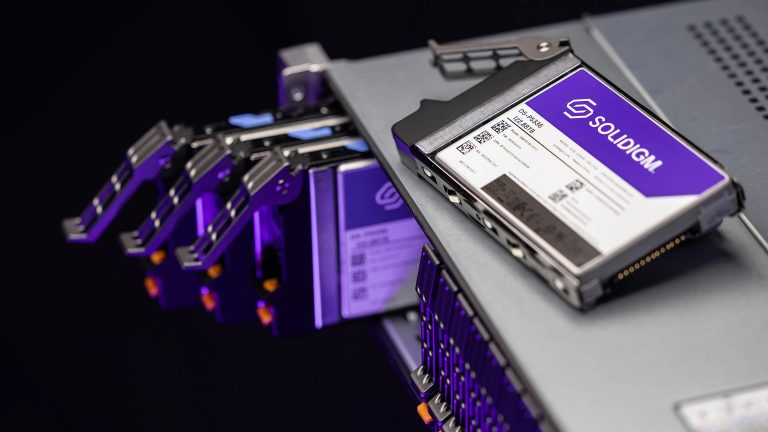
SK Hynix announced on October 23, 2026, that it would halt its review of a potential initial public offering (IPO) for Solidigm, its US-based NAND flash memory and solid-state drive subsidiary. The company had been exploring the possibility of raising external capital through a public listing to finance new production facilities in the United States and meet growing demand for memory and storage products used in artificial intelligence data centres. However, the company said recent financial market conditions and movements in semiconductor share prices had prompted it to reconsider whether an IPO would be the best option for the business and its existing shareholders. The decision represents a significant change in its fundraising strategy, although SK Hynix stressed that its commitment to Solidigm’s long-term growth remains unchanged.
Solidigm’s proposed listing had attracted considerable attention because of its potential size. Reports indicated that the offering could have raised approximately $15 billion, with the subsidiary potentially valued at as much as $150 billion. These figures were estimates associated with the proposed transaction, not funds already raised or a confirmed valuation. Solidigm was established after SK Hynix acquired Intel’s NAND flash memory business for approximately $9 billion in 2021. Its products include enterprise solid-state drives used to store and retrieve data in servers and data centres. As AI infrastructure expands, demand for high-capacity storage has increased, creating opportunities for Solidigm to expand production. A US IPO had been considered one way to secure the additional funding needed to support that growth.
One of the principal reasons for the suspension is increased volatility across financial markets, particularly in the semiconductor sector. Investors have become more cautious about the enormous sums being invested in artificial intelligence infrastructure and whether future earnings will justify current valuations. Semiconductor companies are benefiting from demand for AI processors, high-bandwidth memory and data-centre storage, but their expansion also requires substantial capital expenditure. SK Hynix said the recent correction in semiconductor stocks had made it necessary to reassess the timing and structure of the proposed offering. The company did not say that demand for Solidigm’s products had collapsed. Instead, it emphasised that the decision reflected the prevailing market environment and the need to choose a financing method that best protects shareholder value.
Regulatory concerns in South Korea also contributed to uncertainty surrounding the proposed listing. Financial authorities had been examining whether Solidigm’s potential US IPO could fall under strengthened rules governing duplicate listings, which are intended to protect investors in parent companies when subsidiaries seek separate stock-market listings. Critics were concerned that listing Solidigm independently could weaken the value of existing SK Hynix shareholders’ holdings or create uncertainty about how the subsidiary’s value would be reflected in its parent company’s share price. Although an IPO could provide fresh capital for expansion, regulators and investors also have to consider potential dilution and the distribution of economic benefits. The suspension removes the immediate need to proceed with the proposed transaction while those broader concerns remain relevant to future financing decisions.
Despite halting the IPO review, SK Hynix says it will continue exploring alternative ways to finance Solidigm’s expansion. The company is still assessing the timing, scale and funding structure of future investments, particularly the additional US production capacity needed to serve AI-related demand. Other possibilities include direct investment and alternative external financing arrangements. The decision also highlights a broader challenge facing technology companies: securing enough capital to expand rapidly without exposing existing shareholders to unnecessary financial or regulatory risks. For the AI industry, the outcome will be worth watching because memory and storage infrastructure remain essential to large-scale computing. SK Hynix has not abandoned Solidigm’s growth plans; it has instead put the proposed US listing on hold while reconsidering how that growth should be financed.