
Google Cloud Unveils Gemini Agent to Automate Workplace Tasks
Google Cloud has introduced a universal Gemini agent that can plan and execute complex workplace assignments across apps, business systems and coding environments while maintaining context and memory over long-running tasks.

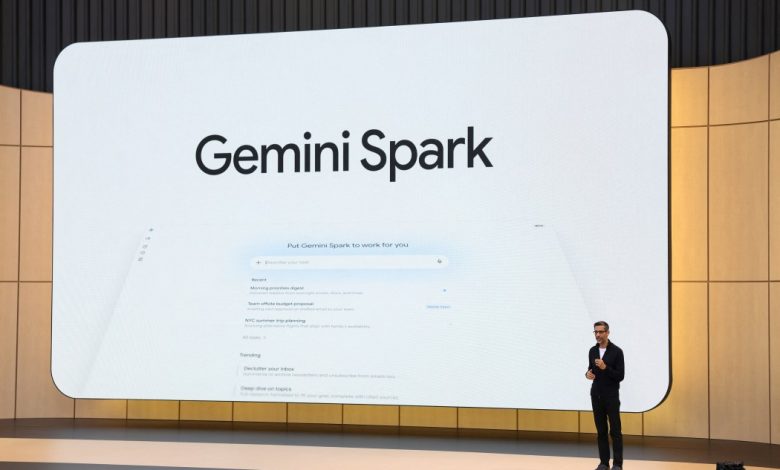
Google Cloud has unveiled a new Gemini agent designed to function as a universal AI worker rather than simply a chatbot. Announced at the Gemini at Work 2026 event, the agent can answer questions, conduct knowledge work, create content, write and run code, and carry out objectives with limited step-by-step instructions from employees. Google says users can give the system an outcome they want rather than manually describing every action required to achieve it.
The agent is designed to work across Google’s workplace ecosystem, including Gmail, Drive, Docs, Sheets, Slides, Chat and Calendar. It can also connect with Microsoft 365 and Slack, allowing employees to delegate work without constantly switching between applications. Google says Gemini can maintain the same context, memory and personalization across different devices and channels, while long-running assignments can continue in the cloud even after a user closes their computer.
Google is also giving Gemini the ability to coordinate multiple specialized AI agents. For complex assignments, the primary agent can create temporary sub-agents with their own identities and responsibilities, allowing different parts of a project to be handled simultaneously or sequentially. Businesses can also create “coworker agents” that operate as digital team members, including agents with their own email identities and access permissions.
Another important feature is Gemini’s multi-model approach. Google says the agent can select the most appropriate model for a particular task, rather than relying on one model for every workload. The system currently supports Google’s Gemini models and Anthropic’s Claude models, with additional proprietary and open-weight models planned. Google is also introducing specialized versions for areas such as financial services and legal work, with other industries expected to follow.
Security and cost management are central to Google’s enterprise strategy for the agent. The company says Gemini includes identity and policy management, authorization and permission controls, secure sandboxing and network gateways. Google is also introducing cost controls such as multi-model orchestration, Smart Routing and real-time spending limits. The company says its latest TPU 8i infrastructure provides 80% better price-performance than the previous generation, helping make large-scale agentic workloads more economical.
The launch places Google directly in competition with other companies building increasingly autonomous AI workers. OpenAI has introduced Dots, while Meta has developed Muse, both targeting systems capable of completing tasks across applications with less human supervision. Google’s advantage is its deep integration with workplace software and cloud infrastructure, potentially allowing Gemini to become a persistent digital coworker for businesses. The Gemini agent is initially available to enterprise customers in private preview, making its real-world performance and reliability an important test of Google’s vision for the agentic workplace.




